You're scrolling through endless listings, trying to figure out which pot won't rot your pothos roots or clash with your living room shelf. It happens to everyone. Pothos are one of the most forgiving houseplants out there, but even they have preferences when it comes to their container — drainage, size, and material all matter more than most people realize. Whether you're a first-time plant parent or you've already got a dozen trailing vines around your apartment, finding the right pot makes ongoing care a lot easier.
Pothos (Epipremnum aureum) thrive in containers that don't trap excess moisture. Overwatering is the number-one way to kill them, so a pot with solid drainage is non-negotiable. Beyond that, you've got options — ceramic, plastic, self-watering, hanging. Each material has trade-offs, and the "best" choice really depends on how you care for your plants and where they're going to live. This guide covers seven well-reviewed options available in 2026, so you can find the one that fits your setup without the guesswork. For more container ideas beyond pothos, check out our gardening reviews section.
We looked at build quality, drainage design, aesthetics, and value across a range of price points. Some of these pots are purely functional; others double as decor. A few are self-watering, which is a genuine lifesaver if you travel or just tend to forget watering day. Read through the reviews, check the buying guide at the end, and you'll have a clear picture of what to order.
Contents
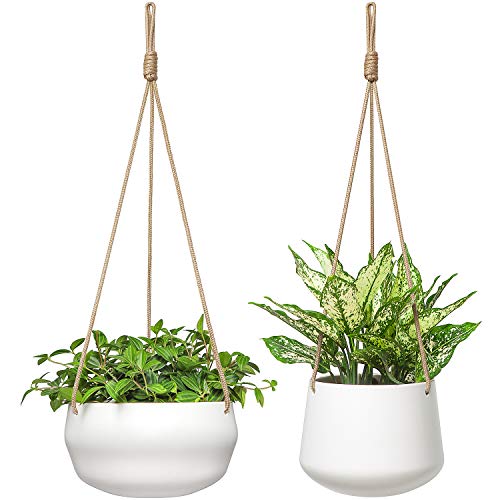




Trailing pothos are practically made for hanging planters, and the Mkono set does a thoughtful job of covering two different growth scenarios in one purchase. You get a shallow 8-inch pot (8"W × 4.5"H) that's wide enough to let light reach petite plants across the soil surface, and a deeper 6-inch companion (6"W × 5.3"H) that gives roots more vertical room to grow. Both hang from polyester rope at a combined height of 26 inches, which gives you that layered, cascading look without DIY fuss. The matte white glaze is genuinely clean-looking — not the glossy, plasticky white that photographs well but looks cheap in person.
Ceramic adds weight compared to plastic or resin, and these are no exception. At 2.2 and 2.4 pounds each before soil, you'll want to make sure your ceiling hook or curtain rod bracket is rated for the load. That said, the heft is also part of what makes them feel quality. They sit steady when not hanging, so you can set them on a shelf or window ledge if you change your mind about the hanging arrangement. The matte glaze resists minor water marks well, and the porcelain construction doesn't develop the chalky residue that some cheaper ceramics do over time.
If you're hunting for a pot that looks intentional rather than utilitarian, this set is a strong pick. It works for pothos, ivy, philodendrons, or just about any trailing plant you'd want dangling near a window. The two-pot setup also means you can try both configurations and see which your pothos prefers. Just factor in ceiling load capacity before ordering, and have a sturdy hook ready.
Pros:
Cons:
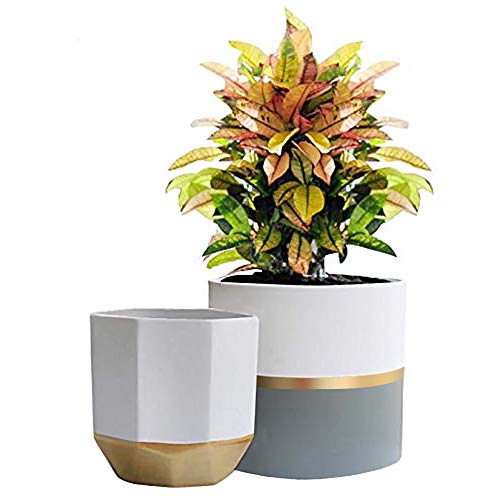
If you want something that doubles as decor, the LA Jolie Muse set is worth a close look. You get two pots — a taller cylindrical grey one at 6.7"W × 6.1"H and a smaller asymmetrical gold-accented one at 5.4"W × 5.2"H. The color-block design and metallic detailing are genuinely distinctive. This isn't a plain white pot with a drainage hole. It's the kind of thing you put on a bookshelf or kitchen counter and people actually notice. The gold and grey detailing gives the set a polished, modern look that works in both minimalist and eclectic interiors.
Beyond aesthetics, these pots are practical. Each one has a drainage hole at the base, which is exactly what pothos need. You'll want to pair them with saucers — check out our roundup of the top plant saucers if you need recommendations — since the pots don't include them. The ceramic is sturdy and feels solid, not lightweight and hollow. Both pots are realistically sized for small-to-medium pothos, and the taller cylindrical one in particular gives roots decent depth to spread.
One thing to keep in mind: the asymmetrical smaller pot is more of an accent piece. It's not designed to hold a mature, heavily rooted plant. Think of it as a home for a young cutting or a smaller companion plant. Together the set creates a nice visual pairing, and if you're the type who thinks about how your plant collection looks as a whole, this set earns its spot. The price sits in the mid-range for decorative ceramics, which feels fair given the quality of the finish.
Pros:
Cons:
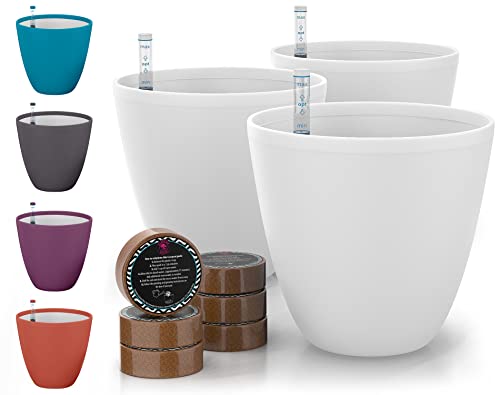
Self-watering pots (containers with a built-in water reservoir that plants draw from as needed) are a game-changer for busy plant parents, and GARDENIX delivers one of the more thoughtful designs in this category. The system uses a nested inner pot with legs that lift the plant above the water reservoir. Roots drink upward through capillary action — only pulling moisture when they actually need it. This eliminates the boom-and-bust watering cycle that stresses pothos roots and leads to the yellowing leaves most people attribute to "overwatering." Which it is — just indirectly.
The pots are made from high-quality polypropylene (a durable, food-grade plastic that doesn't crack or leach), and the colors are pigment-injected into the material itself rather than painted on. That matters outdoors where UV exposure fades surface coatings quickly. Each pot also includes a water level indicator, so you can see exactly how much reservoir water remains without guessing. There's even a small dial that tracks plant growth over time, which sounds gimmicky but turns out to be a nice visual motivator. The pack of three is good value if you have multiple pothos or want to standardize your setup.
One caveat: pothos actually do fine drying out between waterings, and some growers worry that a constant reservoir could push moisture levels higher than ideal. In practice, the raised-leg design prevents the roots from sitting directly in water, which sidesteps root rot. But if you're the type who prefers full control over watering schedules, a standard pot might suit you better. If you want to water less frequently without sacrificing plant health, GARDENIX is a strong choice. The 3-pack comes in white, grey, purple, and teal — useful if you want a consistent look across your space.
Pros:
Cons:
If you're propagating pothos cuttings or want to pot up several plants at once without spending much, the homenote 8-pack is hard to beat on pure value. At 7.5 inches, these pots are a solid medium size — big enough for a mature pothos to fill out comfortably, small enough to fit on most windowsills and shelves. The 3mm-thick plastic walls are noticeably sturdier than dollar-store alternatives. You won't accidentally crush them when moving them around, and they won't crack from minor drops.
The drainage design is genuinely well-executed. Multiple small holes at the base prevent clogging without letting soil escape — a surprisingly common failure point in cheap plastic pots where either the holes are too large (soil falls through) or too few (water pools). Each pot comes with a matching tray to catch runoff, which protects floors and shelves without needing a separate saucer purchase. The smooth, clean surface looks presentable even without a cache pot (a decorative outer container).
These are utilitarian pots. They're not going to be the centerpiece of a styled shelfie. But if you're growing pothos for the love of plants rather than for the Instagram, they do exactly what you need them to do at a fraction of the cost of ceramic. Lighter than ceramic also means easier to move when you're rotating plants for light or cleaning. For someone starting out with pothos or scaling up a collection, this 8-pack is a sensible starting point. If you want to understand more about what soil works best inside these kinds of containers, our guide to best organic potting soils for container gardening is a useful companion read.
Pros:
Cons:
When your pothos has outgrown its starter pot and you want something with real presence on the floor or a large shelf, the Bloem Saturn steps up. At 12.25 inches across the top and just under 11 inches tall, it holds 3 gallons — enough for a well-established pothos with a root system that needs room to expand. The charcoal color is a versatile neutral that reads as sophisticated rather than utilitarian, especially with the matte finish that resists fingerprints and surface scratches. The matte charcoal look pairs particularly well with lighter-colored walls and white or natural wood furniture.
Bloem manufactures in the US and the build quality shows. The resin (a hard plastic composite) construction is thick enough that it doesn't flex when you press on the sides — a quick test that reveals cheaper pots instantly. Pre-drilled drainage holes at the base come standard, and the matching saucer tray is sized to actually catch the water volume this pot can drain rather than overflowing on the first watering. That's a detail that sounds minor but becomes annoying very quickly with undersized saucers.
One thing to consider: at this size, you're committing to a spot for your pothos. Moving a 12-inch pot filled with moist soil isn't a casual exercise. A rolling plant caddy (a low platform with wheels) pairs nicely with this if you rotate plants for light. The pot is rated for both indoor and outdoor use, so it's viable on a patio or balcony if that's where your pothos will live. For anyone who also grows fiddle leaf figs, lavender, or other medium-to-large plants, you'll likely find this same manufacturer makes pots worth comparing — see our best pots for fiddle leaf fig guide for reference.
Pros:
Cons:
Ten self-watering pots in one order is a compelling proposition for plant collectors. The T4U set gives you 6-inch resin pots with an internal drainage reservoir that releases moisture gradually, keeping the soil consistently moist without waterlogging. You drop your watering frequency to once or twice a week rather than every couple of days, which adds up to a meaningful time saving if you're caring for multiple plants. The consistent moisture delivery is particularly good for pothos, which prefer even soil moisture over dramatic wet-dry swings.
The resin material is lightweight — noticeably lighter than the polypropylene GARDENIX pots — which makes these easy to move around. White resin keeps a clean look that works on open shelving or windowsills without looking out of place. At 6 inches, these are sized for small-to-medium pothos, starter plants, or cuttings that have graduated from propagation water. The internal reservoir design is straightforward: fill through the top, and the system handles the rest. There's no external water level indicator here, which is a minor drawback compared to the GARDENIX set.
At ten pots per order, the per-unit price is very low. If you're standardizing a plant collection or outfitting a grow shelf, buying in this quantity makes financial sense. The trade-off compared to the GARDENIX set is the lack of a water level window and the lighter construction. But if you want a lot of functional, decent-looking self-watering pots without spending much, T4U delivers. Worth noting: because these are modestly sized, they'll suit smaller-growing pothos cultivars like 'N'Joy' or 'Pearls and Jade' particularly well.
Pros:
Cons:
Sometimes the right pot is the one that disappears into the background and lets the plant do the talking. The D'vine Dev cylinder planter in oatmeal does exactly that. At 6.5 inches in diameter and 6.6 inches tall, it's a near-perfect cube proportion that works on desks, bathroom shelves, bedside tables, and kitchen windowsills. The oatmeal glaze has a warmth that matte white lacks — it reads as neutral without being sterile, and it pairs naturally with natural wood tones, linen, and the kind of earthy palette that's been popular in interior design for the last several years.
The functional basics are solid. There's a drainage hole at the base, and a matching ceramic saucer is included — not an afterthought plastic tray, an actual matching earthenware saucer that completes the look. The pot holds 0.5 gallons (2 quarts) of soil, which is appropriate for small to medium pothos. This isn't a pot you'll grow a massive trailing plant in, but for a pothos perched at eye level on a shelf or desk where you want something that looks considered and tidy, it's exactly right.
Construction quality is good. The walls have even thickness, the glaze is consistent without blotching, and the drainage hole is properly positioned and sized. If you're comparing this to the LA Jolie Muse set reviewed earlier, the D'vine Dev trades the decorative detailing for a quieter, more timeless look. Neither is better — they serve different aesthetics. For someone who likes clean lines and quiet materials, the D'vine Dev is the more natural choice. It's also worth noting that ceramic pots like this one are breathable enough to allow minor air exchange through the walls, which slightly benefits root health compared to non-porous plastic. According to Wikipedia's overview of pothos care, these plants grow well in a variety of containers as long as drainage is adequate — and this pot handles that well.
Pros:
Cons:
Before you think about color, size, or material, check for drainage holes. Pothos sitting in standing water will develop root rot (a fungal condition where roots decay from prolonged moisture exposure) within weeks. Every pot on this list has drainage or a system designed to prevent waterlogging — but if you're shopping beyond this guide, that drainage hole should be the first thing you confirm. If you fall in love with a pot that lacks drainage, you can use it as a cache pot (a decorative outer container) and drop a plastic nursery pot with drainage inside it. This is actually a common approach that protects your plant while keeping the aesthetic clean.
Ceramic and terra cotta allow minor air exchange through their walls, which benefits root health over time. Plastic and resin are non-porous, which means soil stays moist longer — helpful in dry climates, but something to manage carefully in humid environments or if you tend to overwater. Self-watering pots are typically plastic or resin by necessity, since the reservoir system requires a non-porous structure. If breathability matters to you, lean toward ceramic. If you want lightweight and low-maintenance, plastic is a reasonable trade-off. The same logic applies when you're choosing pots for other plants — our guide to pots for aloe plants covers this in more depth for another common houseplant that shares pothos' preference for well-draining conditions.
Pothos don't need enormous pots — they actually do well slightly rootbound (when roots fill the container). A pot that's 1-2 inches larger in diameter than the plant's current root ball is typically ideal. Going too large means excess soil retains moisture the roots can't use, increasing rot risk. For most home pothos, something in the 6-to-10-inch diameter range covers the majority of growth stages. Move up a size only when you see roots emerging from the drainage hole or the plant visibly wilting despite regular watering.
Self-watering pots make sense for frequent travelers, forgetful waterers, or anyone managing a large plant collection. The reservoir systems in the GARDENIX and T4U pots reviewed here are well-designed and genuinely reduce watering frequency. The trade-off is less moment-to-moment control over moisture levels and a somewhat bulkier design. Traditional pots with drainage holes give you full control — you decide when and how much to water. Neither approach is wrong. It really comes down to your watering habits and how much attention you want to pay.
For most pothos, a 6-to-8-inch pot is a good all-around size. Pothos grow well slightly rootbound, so you don't need to give them a lot of extra room. If your plant is already established and showing roots at the drainage hole, step up to a pot that's 1-2 inches wider in diameter. Avoid jumping to a very large pot all at once — excess soil without roots to use the moisture can lead to root rot even with good drainage.
Yes, drainage holes are strongly recommended. Pothos are susceptible to root rot when their roots sit in standing water for extended periods. A pot with no drainage limits your ability to flush salts from the soil and makes overwatering very easy to do by accident. If your favorite decorative pot doesn't have a drainage hole, use it as an outer cache pot and place a draining nursery pot inside it.
Both work. Ceramic is breathable, which allows minor air exchange through the pot walls and slightly faster soil drying between waterings — good if you tend to overwater. Plastic retains moisture longer, which can be useful in dry climates or if you tend to underwater. The choice often comes down to aesthetics, weight, and budget. Ceramic looks better in most home settings but costs more and is heavier. Plastic is practical, lightweight, and affordable, especially in multi-packs.
Yes, and many growers find it works very well. The key is that the self-watering system must lift the roots above the reservoir rather than letting them sit directly in water. Both the GARDENIX and T4U pots reviewed here use a nested inner container with legs for exactly this reason. Pothos draw moisture upward through the soil as needed without the roots being submerged. The result is consistent soil moisture without the overwatering risk of a traditional reservoir.
Typically every 1-2 years, or whenever you see roots growing out of the drainage hole, circling visibly at the soil surface, or the plant wilting despite regular watering. Pothos are fast growers and will fill a pot fairly quickly in good conditions. Spring is the ideal time to repot — the plant is entering its active growing season and recovers well. Move up only one pot size at a time to avoid excess soil retaining moisture the roots can't use.
White, cream, and neutral tones like oatmeal or grey are the most popular choices because they let the plant's green foliage do the visual work. Charcoal and dark matte colors also look sharp and create strong contrast with the leaves. For hanging pots, white or natural textures are classic. That said, there's no wrong answer here — pothos are versatile plants that look good in almost any container. Pick something you'll enjoy looking at every day, since the pot will be a permanent fixture in your space.
 |
 |
 |
 |

About Christina Lopez
Christina Lopez grew up in the scenic city of Mountain View, California. For eighteen ascetic years, she refrained from eating meat until she discovered the exquisite delicacy of chicken thighs. Christina is a city finalist competitive pingpong player, an ocean diver, and an ex-pat in England and Japan. Currently, she is a computer science doctoral student. Christina writes late at night; most of her daytime is spent enchanting her magical herb garden.


Get new FREE Gifts. Or latest free growing e-books from our latest works.
Disable Ad block to reveal all the links. Once done, hit a button below
|
|
|
|
 rinjal