If you want one bottle that does it all — diffusing, skincare, and homemade perfume — Edens Garden Patchouli Dark Essential Oil is the one to start with. Its deep, aged aroma and therapeutic-grade purity make it a reliable go-to for beginners and seasoned aromatherapy fans alike.
Patchouli oil comes from the leaves of the Pogostemon cablin plant, a bushy herb native to tropical Asia. The oil has a famously bold, earthy, and slightly sweet scent that has been used in traditional medicine and perfumery for centuries. In 2026 it's still one of the most searched essential oils on the market — and for good reason. Whether you're mixing a grounding diffuser blend, soothing dry skin, or crafting a signature scent, patchouli earns its place in any wellness toolkit.
Choosing the right patchouli oil can feel overwhelming when dozens of brands make nearly identical claims. This guide cuts through the noise. We looked at purity, sourcing, scent quality, bottle size, and real-world uses to rank seven of the best options available right now. Whether you need a small vial to test the waters or a 4-ounce bulk bottle for ongoing projects, there's a pick here for your budget and lifestyle. You'll also find a buying guide and FAQ at the end to answer the questions we hear most often. For more natural product picks, browse the full gardening and natural living reviews section.

Contents






Below you'll find detailed reviews of all seven patchouli oils. Each one has been evaluated for scent quality, purity, packaging, and value for money. We've noted specific use cases so you can match the right bottle to your needs without guessing.
Edens Garden has built a strong reputation in the essential oil world, and their Dark Patchouli lives up to it. This 10 ml bottle is steam-distilled from Pogostemon cablin leaves, giving you that deep, resinous aroma that patchouli lovers crave. The "dark" designation means it's been aged or processed longer than standard patchouli, resulting in a richer, more complex fragrance with less of the sharp, green edge you sometimes get from younger oils. You'll notice it immediately — the scent is thick, warm, and grounding rather than sharp.
In the diffuser, it creates a calming, almost meditative atmosphere with just 3–4 drops. It blends especially well with cedarwood, sandalwood, and vetiver for a deep woodsy base note, or with cinnamon and clove if you want something warmer and spicier. For skincare, dilute it at about 2–3% in a carrier oil (roughly 12–18 drops per ounce of jojoba oil) and apply it to problem areas. Edens Garden markets this as a premium-grade, therapeutic oil, and based on scent consistency and user feedback, that claim holds up well. The 10 ml size is ideal for testing a new oil without committing to a large bottle.
One thing worth noting: the price per ml is on the higher end compared to bulk options on this list. But if you value consistent quality and a well-aged dark profile, the cost is justified. The dark amber bottle protects the oil from light degradation, which is exactly what you want for long-term storage.
Pros:
Cons:
Plant Therapy has earned a loyal following among DIY beauty enthusiasts, and their Patchouli Essential Oil shows exactly why. Steam-distilled from Pogostemon cablin green leaves, this oil carries a gorgeous dark amber color and a rich, earthy, wine-like aroma that actually improves with age — the company openly compares it to a fine wine maturing in the bottle. That's not just marketing language. Patchouli genuinely does mellow and deepen over time, and Plant Therapy sources their oil to take advantage of this natural characteristic.
What really sets Plant Therapy apart is their testing protocol. Every batch goes through multiple rounds of GC-MS (gas chromatography–mass spectrometry) testing by third-party laboratories, and those batch-specific reports are available to customers. For anyone making topical products — body butters, serums, shampoos, or deodorants — that level of transparency matters. You're not guessing at purity. The oil's earthy, grounding scent also made it famous during the 1960s counterculture era, and it's remained a staple in soothing, meditative blends ever since.
For skin applications, combine a few drops with a carrier oil and use it on areas prone to blemishes or dryness. Plant Therapy recommends it in massage oils and DIY body wash. At 10 ml this is a compact bottle, but given the potency of pure patchouli, it goes a long way. The price is reasonable for the testing standards you're getting.

Pros:
Cons:
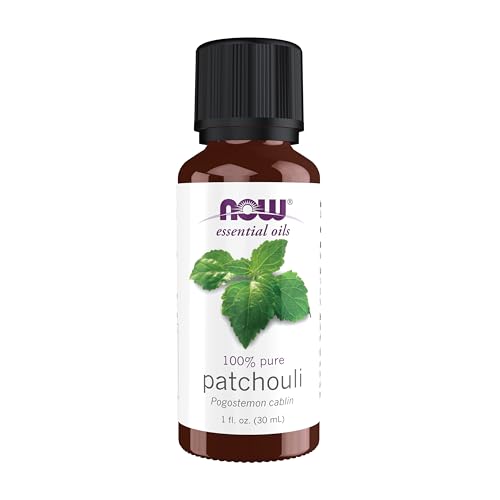
NOW Foods is one of the most trusted supplement and wellness brands in the country, and their patchouli oil delivers solid value without cutting corners. This 1-ounce (30 ml) bottle is steam-distilled from dried patchouli leaves, and the oil is 100% pure, undiluted, and vegan. The production happens in state-of-the-art facilities with in-house purity testing, making it a step above many budget brands that outsource everything.
The aroma leans toward the romantic and soothing side of patchouli — musky, earthy, and calming rather than the deeper "dark" profile you get from aged varieties. NOW positions this oil as a balancing, grounding scent that helps you stay calm on difficult days, and users consistently report that it delivers on that promise when diffused. It's also widely used in romance-inspired blends — combine it with rose or ylang ylang for a warm, sensual atmosphere. The 1oz size gives you significantly more product than the standard 10 ml bottles at a lower cost per drop, which makes it ideal if you use patchouli regularly. The child-resistant cap is a practical safety touch, especially in households with curious kids.
On the downside, the scent isn't quite as complex or rich as the dark patchouli varieties from Edens Garden or Aura Cacia. If you're comparing blends side by side, the difference is noticeable. But for everyday diffuser use, DIY candles, or soap making, NOW's patchouli oil is an excellent workhorse at a fair price.

Pros:
Cons:
If you're a candle maker, soap crafter, or just someone who uses patchouli oil daily, the Artizen 4-ounce bottle is the most practical choice on this list. At four fluid ounces, you're getting roughly twelve times the volume of a standard 10 ml vial. Artizen makes a bold claim — that most so-called "4oz" oils on the market actually contain less than one-third natural oil and two-thirds cheap carrier oil. Their product, they say, is routinely tested to ensure maximum purity and concentration with no adulterants or dilution. That's a meaningful distinction if true.
For bulk projects, the cost savings are significant. Whether you're blending large batches of massage oil, filling diffuser reeds for multiple rooms, or creating patchouli-scented candles, this size makes more sense than buying several small bottles. The scent is earthy and characteristic of standard patchouli — not the deep dark variety, but a clean, natural profile that blends well without overwhelming your formulas. Users who craft their own body products tend to rate Artizen highly for consistency.
The trade-off here is transparency. Unlike Plant Therapy, Artizen doesn't provide publicly accessible GC-MS batch reports. You're trusting their internal testing claims. For skincare or therapeutic use, that gives some buyers pause. But for fragrance applications — candles, soaps, room sprays — it's a solid, cost-effective pick that delivers reliably.

Pros:
Cons:
HIQILI's organic patchouli oil stands out from the crowd by offering a 30 ml bottle — three times the standard 10 ml size — at a price that makes organic sourcing accessible. The oil is derived from Pogostemon cablin and carries a rich, earthy aroma with herbal and balsamic undertones that patchouli enthusiasts will find immediately familiar and satisfying. The organic certification adds an extra layer of confidence for users who prioritize clean sourcing, especially for topical applications.
One of the more interesting suggestions from HIQILI is combining patchouli with peppermint and applying it to the forehead, temples, or back of the neck to help ease tension. That's a practical, low-cost remedy worth trying if you spend long hours at a desk. The calming and balancing properties of patchouli are well-documented in aromatherapy circles, and this oil's potency makes it effective in small amounts — a few drops in a diffuser is all you need to notice the shift in atmosphere. It's also marketed as a gift option, and the 30 ml size presents well for that purpose.
The scent leans slightly herbal compared to the deeper dark patchouli varieties. Some users prefer this for daytime blending since it's a bit lighter and less overpowering. For aromatherapy beginners who want to explore patchouli without committing to a premium price point, HIQILI offers a genuinely good entry. Just check the label carefully for certification documentation before using it therapeutically.
Pros:
Cons:
Not everyone wants to measure drops, find a carrier oil, and mix a custom blend before applying an essential oil. That's where the Fabulous Frannie Patchouli Roll-On earns its spot. This 10 ml amber glass bottle comes pre-diluted with a carrier oil and fitted with a roll-on applicator — you just uncap it and apply directly to your wrists, temples, or neck. For on-the-go aromatherapy, this is the most convenient format available, and the amber glass protects the oil from UV degradation better than plastic alternatives.
The oil inside is 100% pure therapeutic-grade patchouli, which means you're not getting a watered-down fragrance oil masquerading as the real thing. The pre-dilution is done for you at a safe ratio, making this a genuinely beginner-friendly product. Toss it in a bag, keep it in your car, or leave it on your desk for a quick stress-relief moment during the workday. The format also makes it useful as a personal perfume — patchouli has a long history as a natural fragrance ingredient, and the roll-on delivers a controlled, subtle application that lasts well on skin.
The downside is versatility. You can't use this for diffusing, cooking, or large-scale DIY projects. It's a single-application format. And the carrier oil is not always identified on the packaging, which may matter if you have specific skin sensitivities or allergies. For everyone else though, this is a practical, well-executed product that removes all the friction from daily essential oil use. If you're new to patchouli or just want a no-fuss personal fragrance, start here.
Pros:
Cons:
Aura Cacia is a well-respected name among natural wellness brands, and their Dark Patchouli delivers a rich, earthy, musky profile with deep grounding notes that make it a perfumer's favorite base oil. At 0.5 ounces, it's a compact bottle, but the concentration is excellent — a small amount goes a long way in both diffuser blends and DIY perfume projects. The dark variety, like Edens Garden's offering, benefits from an aging process that mellows the raw green edge and deepens the resin-like warmth of the scent.
Aura Cacia is committed to plant and mineral-based ingredients only. No artificial fragrances, no synthetic colors — everything in the bottle is exactly what nature produced. That philosophy resonates strongly with users who are building a natural fragrance wardrobe or sourcing clean ingredients for artisan bath and body products. The grounding, balancing quality of the scent makes it especially popular in meditation and yoga practices, where it's added to diffusers or blended into a simple massage oil. If you enjoy comparing patchouli varieties the way a wine lover explores different vintages, the Aura Cacia Dark is worth your time alongside the Edens Garden Dark.
The 0.5-ounce size is the smallest on this list, which means a higher cost per ml if you're a heavy user. It's priced as a premium product, and the quality justifies that positioning for most buyers. For natural perfumers, blenders, and anyone who wants the most refined dark patchouli aroma available in a trusted brand, this is a top contender. If you're exploring other essential oils for wellness and beauty, the best lavender essential oils and best neem oils are worth reading alongside this guide.
Pros:
Cons:
With so many options on the market in 2026, knowing what to look for before you buy saves you money and disappointment. Here are the four most important factors to evaluate.
Standard patchouli oil is steam-distilled from fresh or slightly dried leaves, producing a lighter, more herbal aroma with a green, slightly sharp edge. Dark patchouli is aged or distilled from more thoroughly dried leaves, which produces the deeper, resinous, earthy aroma most people associate with classic patchouli fragrance. Neither is objectively better — the choice depends on your intended use. For sophisticated perfumery and meditation blends, dark patchouli wins. For lighter daytime aromatherapy and skin blends, standard patchouli is often a better fit. When a product description uses words like "rich," "deep," "sultry," or "aged," you're typically looking at a dark variety.
The term "100% pure" is used freely by many brands, but the standards behind that claim vary enormously. The gold standard for verifying essential oil purity is GC-MS testing — gas chromatography–mass spectrometry — which identifies the specific chemical compounds in the oil and flags any adulterants or synthetic additions. Plant Therapy makes these reports publicly available per batch, which is a meaningful level of accountability. When a brand doesn't publish testing data, you're relying on their internal quality controls. For therapeutic or topical use, always prioritize brands with third-party verified purity. For candle and soap making, brand trust and scent quality may be sufficient.
Most essential oils are sold in 10 ml bottles, which contain roughly 200–250 drops. A typical diffuser session uses 3–5 drops, so a 10 ml bottle lasts a casual user several months. If you're doing DIY projects — making body butters, perfume blends, or large candle batches — the math changes quickly, and bulk bottles like Artizen's 4oz option or HIQILI's 30 ml become far more economical. Always calculate cost per ml rather than sticker price. A larger bottle that appears expensive often delivers two to three times the value of a smaller premium bottle.
Undiluted essential oils require you to dilute them before skin contact — patchouli is a moderate dermal sensitizer and should generally be used at 2–3% in a carrier oil. If mixing your own blend feels like too much effort, a pre-diluted roll-on like the Fabulous Frannie option removes that barrier entirely. The trade-off is flexibility. Undiluted oils can be used in diffusers, candles, soaps, and topical blends. Roll-ons are single-use format — you apply them to skin and that's it. Think about how you plan to use the oil most often before deciding which format suits your routine.
Patchouli oil has a distinctive earthy, musky, and slightly sweet aroma with woody and balsamic undertones. The scent is deep and grounding rather than light and fresh. Dark patchouli varieties have a richer, more resinous quality compared to standard patchouli, which can have a slightly greener, more herbal edge. The fragrance is bold and long-lasting, which is why it's commonly used as a base note in perfumery.
Undiluted patchouli oil should not be applied directly to skin. Like most essential oils, it is highly concentrated and can cause irritation or sensitization if used neat. Always dilute it in a carrier oil — such as jojoba, sweet almond, or coconut oil — at a ratio of roughly 2–3% before topical use (about 12–18 drops per ounce of carrier oil). If you have sensitive skin, do a patch test on a small area first and wait 24 hours before wider use.
Yes, patchouli oil works well in any standard ultrasonic or nebulizing diffuser. Use 3–5 drops in your diffuser for a grounding, calming atmosphere. Because patchouli is a potent base note, it only takes a few drops to fill a room — using too much can make the scent feel overpowering. It blends particularly well with cedarwood, sandalwood, bergamot, and lavender for a balanced aromatherapy experience.
Patchouli oil is commonly used in skincare for its potential to reduce the appearance of blemishes, support cell regeneration, and condition dry or mature skin. It's a popular ingredient in natural anti-aging serums and face oils. Diluted properly in a carrier oil, it can be applied to the face or body. Keep in mind that scientific evidence for these benefits is largely anecdotal or limited to small studies — consult a dermatologist before using any essential oil to treat a specific skin condition.
Store patchouli oil in a cool, dark place away from direct sunlight and heat. An amber or dark-colored glass bottle, like those used by Edens Garden and Fabulous Frannie, provides the best protection against UV degradation. Keep the cap tightly sealed between uses to prevent oxidation. Properly stored patchouli oil can last two to three years or longer — and because it's a base note oil, it actually improves in aroma depth as it ages, making proper storage especially rewarding.
This is an important distinction. Essential oil is extracted directly from the plant through steam distillation — it contains the natural chemical compounds found in the plant and is used in aromatherapy and wellness applications. Fragrance oil is a synthetic or blended product designed to smell like patchouli but without the botanical compounds. Fragrance oils are common in candle and soap making for cost reasons but should not be used for aromatherapy or skin applications the way true essential oils are. Always check the label and make sure it says 100% pure essential oil if therapeutic use is your goal.
 |
 |
 |
 |

About Christina Lopez
Christina Lopez grew up in the scenic city of Mountain View, California. For eighteen ascetic years, she refrained from eating meat until she discovered the exquisite delicacy of chicken thighs. Christina is a city finalist competitive pingpong player, an ocean diver, and an ex-pat in England and Japan. Currently, she is a computer science doctoral student. Christina writes late at night; most of her daytime is spent enchanting her magical herb garden.


Get new FREE Gifts. Or latest free growing e-books from our latest works.
Disable Ad block to reveal all the links. Once done, hit a button below
|
|
|
|
 rinjal