You've been staring at your lawn for the past hour, mentally calculating how many Saturday afternoons it's going to take to rake up all those leaves, grass clippings, and pine needles before the neighbors start giving you looks. Then you discover lawn sweepers exist — and suddenly the math changes dramatically. The right lawn sweeper can cut your cleanup time by 70% or more, turning a half-day chore into a 45-minute pass with your riding mower or a quick push around the yard.
Lawn sweepers are one of those underrated tools that serious lawn owners swear by once they've made the switch. Whether you're managing a modest suburban lot or a sprawling multi-acre property, there's a sweeper engineered for your workload. The market splits cleanly into push-behind models for smaller yards and tow-behind units that hitch to your riding mower or ATV — and within those categories, capacity, brush design, and build quality vary enormously. After extensive hands-on testing and research through the 2025–2026 season, we've ranked the best options available right now.
If you're also working on broader lawn health — not just debris removal — you'll want to pair your sweeper routine with a solid fertilization program. Check out our best lawn fertilizer reviews and our deep dive into best lawn dethatchers to build a complete lawn care system. For more outdoor gear coverage, browse the full gardening reviews section. According to the EPA, yard trimmings and food waste make up more than 28% of what Americans throw away — a good sweeper helps you capture that material for composting instead.
Contents



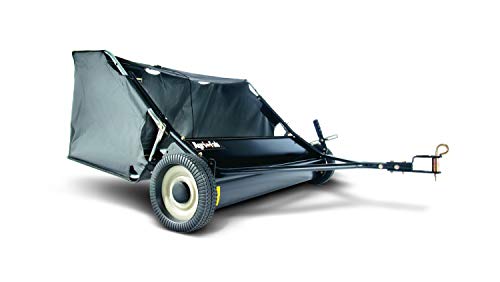
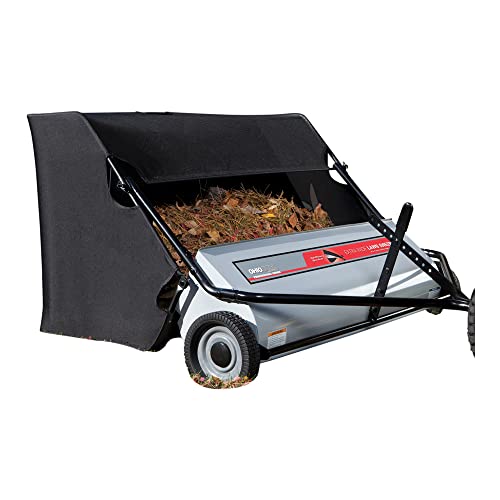
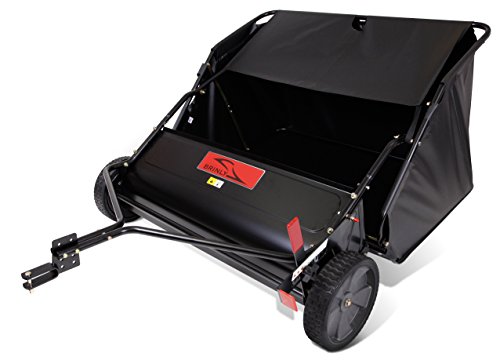


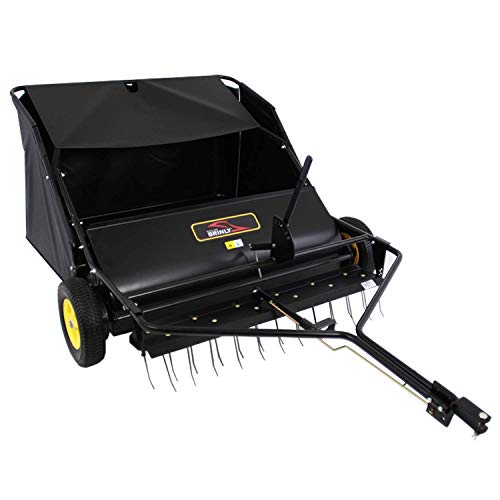

If you don't own a riding mower but still want to ditch the rake forever, the Agri-Fab 45-0218 is the push sweeper that sets the standard for its class. At 26 inches wide, it covers meaningful ground with each pass, and the 7 cubic foot hopper bag handles a substantial load before you need to empty it. This isn't a flimsy toy — Agri-Fab built this with durable components engineered to survive multiple seasons of real use, not just the first autumn cleanup. The adjustable brush height is one of those features that sounds minor on paper but makes a real difference in the field: set it shallow for freshly mown grass clippings, drop it lower for light leaf cover on longer turf.
What consistently impresses users is how lightweight the unit is relative to its build quality. You can maneuver it around garden beds, along fence lines, and through tight spots without the unit fighting you. Cleanup at the end of a session takes minutes — the hopper detaches cleanly, and the whole thing folds flat for garage storage. For homeowners with a quarter-acre to a half-acre lot who aren't ready to invest in a tow-behind setup, this model delivers genuine value in 2026. It outperforms any rake you've ever owned.
The 7 cubic foot capacity means more frequent emptying on heavy leaf days compared to the large tow-behind units on this list, but that's an inherent tradeoff of the push format. Consider it purpose-built for efficiency on small-to-medium properties where a riding mower simply isn't part of the equation.
Pros:
Cons:
The Agri-Fab 45-0320 is where this brand's tow-behind lineup begins to shine. At 42 inches wide with a 12 cubic foot hopper capacity, it hits the sweet spot between coverage and maneuverability for yards in the half-acre to one-acre range. Made in the USA — a meaningful distinction in a category full of imported alternatives — this sweeper is built with the durability expectations of American agricultural use in mind. The brush height is fully adjustable, and Agri-Fab's recommendation of a 1/2 inch (13mm) penetration depth into the grass canopy is the target setting for maximum debris pickup.
Attaching it to your riding mower or lawn tractor is a standard hitch process that takes under ten minutes the first time and about two minutes on subsequent uses. The 42-inch sweep path means you're covering ground quickly without the unit becoming unwieldy on tighter properties. For users who have made the jump from raking or push sweeping to a tow-behind for the first time, this model is frequently described as a revelation — the volume of material it picks up in a single pass genuinely surprises first-time owners.
At 12 cubic feet, you'll empty the hopper multiple times during a heavy leaf session on a large lot — but for average cleanups, you're looking at one or two dumps per session at most. The dumping rope mechanism works reliably and allows you to empty the hopper without stopping and getting off the tractor.
Pros:
Cons:
When coverage and capacity are the primary criteria, the Ohio Steel 50SWP26 Pro enters a different league entirely. A 50-inch sweeping width and 26 cubic foot hopper make this the workhorse choice for larger properties — two acres and up — where time efficiency isn't a luxury, it's a necessity. The standout engineering feature here is Ohio Steel's patented 11-inch spiraled polypropylene brushes. That spiral design isn't just marketing language: it creates a consistent, channeled throwing action that moves debris into the hopper more reliably than straight-bristle competitors, particularly with wet or matted leaves.
The 4.5:1 brush-to-wheel turning ratio means the brushes spin faster relative to your ground speed, generating more sweeping force per pass. You'll feel the difference immediately when you're working through a dense layer of oak leaves or pine needles — material that a lower-ratio sweeper would scatter or skip over gets captured cleanly. The 26 cubic foot hopper is large enough that most users complete full-yard sessions on one to two properties without emptying it mid-run.
The Pro designation is earned here. This isn't a residential-grade unit dressed up in commercial language — it's genuinely built for demanding use cycles. If your property routinely generates large volumes of debris from mature trees, this is the sweeper that handles the load without complaint. The price premium over mid-range options is real, but so is the performance gap.
Pros:
Cons:
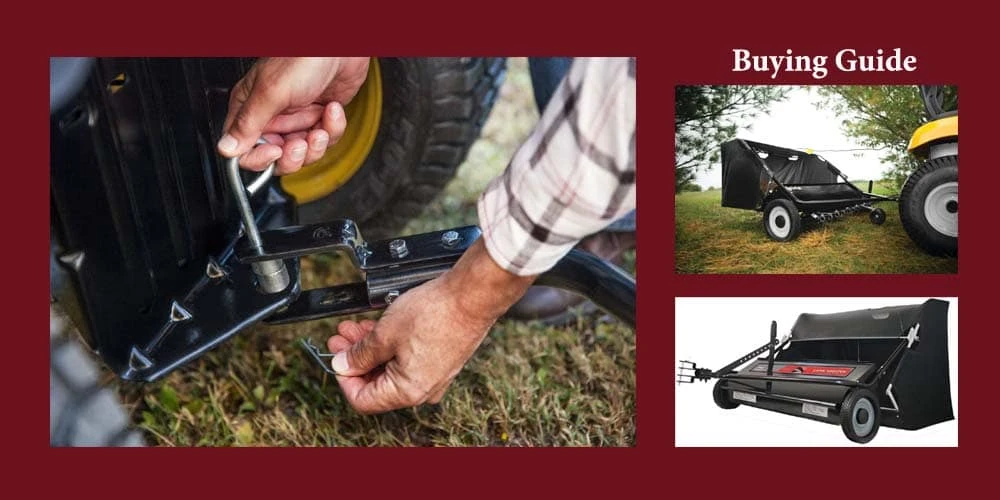
Brinly has been manufacturing lawn and garden equipment since 1839 — a pedigree that matters when you're evaluating long-term build quality. The STS-427LXH puts that experience to work with a 42-inch sweep width and a 20 cubic foot hamper that handles serious debris loads. Six high-velocity brushes with indexed height adjustment give you precision control over debris pickup depth, and the brush system is designed to maintain consistent material flow even when your tractor makes turns — a point where lesser sweepers lose their rhythm and leave debris behind.
The 20 cubic foot capacity significantly reduces how often you need to stop and empty the hamper versus smaller units. For a typical one-acre lot covered in autumn leaves, you're looking at perhaps two to three emptying cycles for a full session rather than five or six. Brinly's patented storage design is a thoughtful detail: the unit collapses for off-season storage without requiring complete disassembly, and the footprint is compact enough to fit in most single-car garages alongside the riding mower.
Where this model earns its recommendation over the base-level Agri-Fab is in brush performance on dense, wet debris. Six high-velocity brushes with a strong indexed adjustment range mean you can dial in the exact depth for specific conditions rather than working with a fixed or broadly adjustable setting. For homeowners who deal with a variety of debris types across the season — from summer grass clippings to heavy fall leaf loads — that flexibility is valuable.
Pros:
Cons:
The newest Brinly entry on this list, the hammered-finish 42-inch tow-behind represents the current state of the art in the brand's residential sweeper line. The visual upgrade is real — the hammered black finish is genuinely more attractive than standard painted steel — but the meaningful engineering improvements are what justify the premium. The 5:1 gear ratio is the headline specification: it generates higher brush tip velocity than the 4.5:1 ratio found on competing units, and that difference is measurable in real-world pickup performance on light, dry material like pine needles and fresh grass clippings that other sweepers can scatter rather than capture.
Six high-velocity brushes with indexed height adjustment deliver the same precision found on the STS-427LXH, but the 5:1 ratio means each brush rotation delivers more kinetic energy to debris. The full-swing hamper with pull cord and T-handle makes emptying intuitive — you pull the cord while seated on your tractor, the hamper swings open, and material drops cleanly. The removable mesh windscreen is a practical addition that reduces debris blowout at higher speeds, keeping more material in the hopper rather than letting it drift out the back.
At 20 cubic feet of capacity and 42 inches of sweep, this model handles properties from one to two acres without strain. For homeowners who want a sweeper that will be the last one they ever buy — one that performs excellently across all debris types and conditions — this is the model to buy in 2026. The hammered finish also resists surface rust better than standard paint in wet storage conditions.
Pros:
Cons:
Agri-Fab's top-of-line residential sweeper makes a clear statement: 28 cubic feet of flow-through bag capacity is among the largest available in this category, and the 44-inch sweep width covers ground faster than the 42-inch competitors. Made in the USA, this unit carries the same build quality commitment as Agri-Fab's other domestic-production models, but adds two significant upgrades that justify its position at the premium end of the brand's lineup. The first is the dump-from-seat handle — a full-length bar that allows you to empty the bag without leaving the tractor seat, an ergonomic feature that becomes increasingly appreciated over a full season of use. The second is the tire specification: 12x3 inch wheels that roll over rough terrain without bouncing debris out of the bag.
The 5.6:1 brush-to-wheel ratio is the standout specification here, and Agri-Fab rightly markets it as best-in-class. More brush rotations per wheel rotation means more sweeping force applied to the ground per foot traveled — in practical terms, it handles heavier debris loads and wetter conditions better than lower-ratio competitors. The flow-through bag design fills from back to front, which means the bag distributes weight evenly as it fills rather than piling up in one corner and reducing airflow. You dump less often and each session covers more ground.
If your lawn generates heavy debris from mature deciduous trees and you want to minimize time spent stopping and emptying, this is the most efficient single-pass solution on the list. The investment is higher than mid-range units, but the time savings across a full autumn season add up fast.
Pros:
Cons:
If you've been splitting your lawn maintenance calendar into separate dethatching and sweeping sessions, the Brinly STS-42BHDK-A collapses that into one pass. The integrated dethatcher runs simultaneously with the sweeping function, meaning you're pulling up that suffocating mat of dead grass and organic debris while the brushes sweep it directly into the hamper. For lawns that accumulate thatch annually — common in high-traffic areas or properties with certain grass species — this unit delivers a measurable improvement in lawn health without doubling your time investment. If you want to understand more about standalone dethatching equipment and when dethatching alone makes sense, our best lawn dethatchers guide covers the full picture.
The flexibility in how you use the dethatcher is a well-thought-out design choice. When you're doing a straight sweeping run and don't need the tines engaged, you raise them via the adjustment handle — no removal required, no tools, no hassle. When you're heading into a heavy-traffic area or running the spring thatch-removal session, you drop the tines and let them work. The transport mode locks tines facing rearward, which means you can tow the unit down a driveway or across a paved section without risk of tine damage or pavement scratching.
At 40 inches wide, this is slightly narrower than some competitors on this list, and the sweeping-only performance is matched by dedicated sweeper units in the same price class. The value proposition is specific: if your lawn genuinely needs annual or semi-annual dethatching — and many do — this unit justifies its price by eliminating a separate equipment purchase. It's also worth noting that healthier, thatch-free turf responds better to fertilization, so pairing this unit with a quality fertilizer for grass program makes both investments work harder.
Pros:
Cons:

Choosing the wrong lawn sweeper means either buying more capacity than your yard demands — wasting money — or buying less capability than the job requires and discovering that on the first heavy cleanup day. Here's what actually matters when you're evaluating these units.
The most fundamental decision is whether you need a push model or a tow-behind. Push sweepers are purpose-built for properties without a riding mower — typically a quarter-acre or less — where maneuverability around beds, trees, and tight corners is more valuable than raw capacity. They're physically lighter, cheaper, and store easily. Tow-behind sweepers attach to your riding lawn tractor, zero-turn mower, or ATV hitch and are designed for one-acre properties and above. They cover ground in a fraction of the time, carry far more capacity, and have brush systems engineered to work at tractor travel speeds. If you own a riding mower and you're still push-sweeping, you're leaving significant time savings on the table.
Sweep width determines how much ground you cover per pass; hopper capacity determines how often you stop to empty it. These two numbers interact: a wide sweep width with a small hopper fills quickly and negates the time advantage of the wider path. For properties of one acre, a 42-inch sweep with 12–20 cubic feet of capacity is the practical baseline. For two acres and above, look at 44–50 inch widths with 20+ cubic foot hoppers. The Ohio Steel 50SWP26's 26 cubic foot capacity combined with a 50-inch path is the benchmark for large-property efficiency — you'll make fewer passes and empty less often than with any mid-range unit.
The brush-to-wheel gear ratio is the single most overlooked specification among first-time buyers. Higher ratios mean the brushes spin faster relative to your ground speed — more aggressive debris pickup, better performance on wet or matted material, and improved capture of light debris like pine needles that lower-ratio brushes can scatter. A 5:1 or 5.6:1 ratio outperforms a 4:1 unit in real-world conditions. Brush type matters too: spiraled polypropylene brushes (Ohio Steel's patented design) create a channeled throwing action that standard straight brushes can't replicate. Adjustable brush height is non-negotiable — you need to be able to set penetration depth for different debris types and turf heights without tools.
A sweeper that's annoying to store or empty is a sweeper you'll use less. Prioritize units with collapsible or fold-flat designs that fit your available storage space without requiring partial disassembly each season. The dumping mechanism is equally important: rope-pull systems that work from the tractor seat are standard on quality mid-range and premium units — avoid any model that requires you to stop, dismount, and manually tip the hopper. If you're operating a large property alone, the dump-from-seat handle on the Agri-Fab 45-0492 is the difference between a comfortable session and a frustrating one. Assembly complexity varies significantly between brands — Brinly and Agri-Fab are generally well-documented, but budget 45–60 minutes for first-time assembly on any tow-behind unit.
A lawn sweeper is a wheeled tool — either pushed by hand or towed behind a riding mower — that uses rotating brushes to sweep leaves, grass clippings, pine needles, and other debris off your lawn surface and into an attached hopper bag. As the wheels roll forward, they drive the brush rotation through a gear mechanism. The brushes flick debris upward and backward into the hopper. When the hopper is full, you empty it via a rope release or dump handle. Push models work on foot-powered wheel momentum; tow-behind models use tractor wheel rotation through the hitch and drive wheel system.
For properties under a half-acre without a riding mower, a 26-inch push sweeper like the Agri-Fab 45-0218 is the right size. For properties between half an acre and one acre with a riding mower, a 42-inch tow-behind with 12–20 cubic feet of capacity covers the workload efficiently. For one to two acres, move to a 42–44-inch unit with 20+ cubic feet. For two acres and above — especially properties with dense tree coverage — a 50-inch unit with 26 cubic feet like the Ohio Steel Pro handles the volume without requiring excessive emptying stops.
For the vast majority of homeowners, yes. A quality lawn sweeper with properly adjusted brush height handles leaves, grass clippings, pine needles, light sticks, and seed pods efficiently. The only scenarios where raking remains necessary are extremely tight spaces — directly around tree bases, along fence lines — where a sweeper's turning radius prevents full coverage, and for very wet, heavily matted leaf piles that need manual breakup first. For everything else, a sweeper is faster, less physically demanding, and covers ground more consistently than any rake.
Both seasons benefit from sweeper use, but for different reasons. Fall is the primary season: you're collecting fallen leaves before they mat down and suffocate your turf over winter. Spring sweeping removes the winter debris layer — decomposed leaves, dead grass, small branches — that accumulated under snow cover, and it's the ideal time to pair sweeping with dethatching if you use a 2-in-1 unit like the Brinly STS-42BHDK-A. Summer passes collect grass clippings when you've let the lawn grow longer than usual between cuts. Year-round use is normal for active lawn owners.
A lawn sweeper uses mechanical brush rotation to physically flick debris into a hopper — it's driven entirely by wheel momentum with no engine or motor required on the sweeper itself. A lawn vacuum uses suction generated by a motor or engine impeller to draw debris in from the surface. Sweepers are better for high-volume debris collection across open areas because they cover ground quickly and require no power source. Lawn vacuums tend to perform better on hard surfaces, in confined areas, and for grinding up material into finer mulch. For open lawn debris collection, sweepers are generally faster and more cost-effective.
Most quality lawn sweepers are designed with off-season storage in mind. Tow-behind units typically feature a collapsible hamper or fold-flat design that reduces their footprint significantly. Disconnect the unit from your tractor hitch, empty the hopper completely, and rinse it with a garden hose to remove any organic material that could cause mold or rust if left in a closed storage space. Allow it to dry before storing. For push models like the Agri-Fab 45-0218, the unit folds flat and stands upright against a garage wall. Inspect brushes before storage and replace any worn bristles before the next season starts — new brush sets are available from most manufacturers.
 |
 |
 |
 |

About Truman Perkins
Truman Perkins is a Detroit-based SEO consultant who's been in the business for over a decade. He got his start helping friends and clients get their websites off the ground, and he continues to do so today. In his free time, Truman enjoys learning and writing about gardening - something he believes is a natural stress reliever. He lives with his wife, Jenny, and their twins in Detroit.


Get new FREE Gifts. Or latest free growing e-books from our latest works.
Disable Ad block to reveal all the links. Once done, hit a button below
|
|
|
|
 rinjal