You're standing in the gardening section of a bookstore — or scrolling through Amazon at midnight — trying to figure out which composting book is actually worth your money. There are dozens of options, ranging from slim beginner guides to deep-dive scientific manuals, and the descriptions all sound promising. The right book can transform your compost pile from a smelly, sluggish heap into a fast-working, soil-building machine.
In 2026, composting has moved well beyond the backyard bin. People are vermicomposting in apartments, humanure composting on homesteads, and using the science of soil biology to grow genuinely healthier gardens. The books on this list cover that full spectrum — from soil food web science to worm bin setup to extreme composting techniques that most guides won't touch. Whether you're a first-timer or a seasoned gardener looking to go deeper, there's a title here for you.
We pulled together the most recommended, most-read, and most practically useful composting books available right now. Each one has been evaluated for depth of content, readability, and real-world application. If you're also working on improving your soil from multiple angles, check out our guide on 19 Organic Fertilizers That You Can Prepare at Home — a solid companion read to any of these books. You can also browse more gardening picks in our gardening reviews section.

Contents






If you want to understand why composting works at a biological level, this is the book. Authors Jeff Lowenfels and Wayne Lewis break down the soil food web — the intricate community of bacteria, fungi, nematodes, protozoa, and other microorganisms that make healthy soil possible. This isn't a step-by-step composting manual; it's the science that explains every step-by-step manual you'll ever read.
The writing is accessible without being dumbed down. Lowenfels translates complex microbiology into plain language that any serious gardener can absorb and apply. Once you finish this book, you'll look at your compost pile, your mulch layer, and your garden beds with completely different eyes. You'll understand why tilling destroys fungal networks, why chemical fertilizers disrupt bacterial colonies, and how finished compost introduces the right organisms to your soil. It's the kind of foundational knowledge that makes everything else click.
This is a used copy in good condition — a smart buy if you want the content without paying full price. The information inside is timeless. Whether you're improving raised beds or trying to understand how to sterilize soil for planting and then restore its biology afterward, this book gives you the conceptual framework to make better decisions in your garden.
Pros:
Cons:
Published by Storey and authored by Stu Campbell, Let It Rot! has been a go-to composting reference for decades — and the third edition holds up remarkably well in 2026. This is the book most composting veterans recommend to beginners because it covers every essential method without overwhelming you with jargon or complexity. Cold composting, hot composting, bin systems, troubleshooting — it's all here in clear, friendly language.
What makes this edition stand out is how it balances theory and practice. You get enough science to understand what's happening in your pile, but Campbell keeps the focus on what you actually need to do. The troubleshooting sections are especially useful — if your compost smells, heats unevenly, or isn't breaking down, this book walks you through diagnosing and fixing the problem. The writing is warm and direct, which makes it easy to read cover to cover or use as a reference.
At its price point, this is one of the best investments you can make if you're just getting started with composting. The Storey publishing imprint is known for practical, no-nonsense guides, and this one delivers exactly that.
Pros:
Cons:
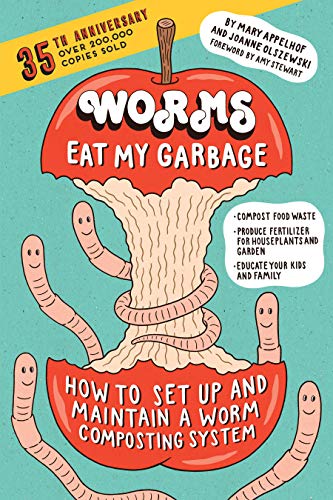
Mary Appelhof's classic worm composting guide has now reached its 35th anniversary edition, and it remains the definitive reference for setting up and running a worm bin. If you've been curious about vermicomposting — turning food scraps into rich castings with the help of red wigglers — this is the first and last book you need. Appelhof covers everything from choosing your worm species to building or buying a bin, managing moisture and temperature, feeding schedules, and harvesting finished castings.
This anniversary edition has been updated to stay current with modern practices. The added content on composting for houseplants and family education makes it especially useful for urban composters and parents who want to teach kids about waste reduction and soil health. The writing is approachable and enthusiastic — Appelhof genuinely loves worms, and that comes through on every page without becoming quirky or off-putting.
Vermicomposting is one of the most practical composting methods for people without outdoor space, and this book makes it completely achievable. You'll finish it confident about what you need to set up your first bin and what to expect as your worm population grows. The 35th anniversary treatment is well-deserved — this book has helped hundreds of thousands of people turn kitchen scraps into garden gold.
Pros:
Cons:
Rodale has been the gold standard in organic gardening publishing for generations, and their composting book lives up to that reputation. This newly revised and updated edition covers the full composting landscape — improving soil structure, recycling organic waste, growing healthier plants, and creating a more sustainable garden ecosystem. It's the most thorough single-volume composting reference on this list, making it ideal if you want one book that covers everything.
The Rodale approach is practical and science-backed without being inaccessible. You'll find detailed coverage of carbon-to-nitrogen ratios, pile construction methods, bin designs, and troubleshooting. The sections on how finished compost improves soil structure, water retention, and plant health are particularly useful for anyone making the shift from synthetic fertilizers to organic methods. The updated edition also incorporates recent research on soil biology, keeping it relevant for 2026 gardens.
As a Rodale Classic, this book carries the weight of a long editorial tradition behind it. It's the kind of reference you keep on your gardening shelf and return to repeatedly. If you're building a serious composting practice and want a book that grows with you as your skills advance, this is the one to get. It pairs well with making your own potting soil — composting and potting mix preparation go hand in hand.
Pros:
Cons:
David the Good has built a loyal following in the homesteading and permaculture world, and Compost Everything is a direct reflection of his philosophy: stop being precious about what goes in the compost pile. This book challenges conventional composting wisdom by showing you how to compost meat, bones, citrus, dairy, and other items that standard guides tell you to avoid. It's provocative, entertaining, and genuinely useful for anyone who wants to close the loop on food waste completely.
The writing is funny and irreverent without losing substance. David the Good backs his claims with real experience — he's tried all of these methods on his own property and reports honestly on what works, what doesn't, and why. The sections on trench composting, chop-and-drop methods, and using compost to build soil in challenging climates are especially valuable for homesteaders and anyone doing large-scale organic growing. This isn't a book that hedges — it takes positions and defends them.
If you've already read the standard composting manuals and you're ready to push further, this is the book that opens up new territory. It won't replace a foundational guide, but it's an excellent companion for experienced composters who want to maximize their system's inputs and outputs.
Pros:
Cons:
Michelle Balz wrote this book for composters who want to go beyond the basic backyard bin — and she delivers. Composting for a New Generation covers a wide range of modern techniques including bokashi fermentation, vermicomposting, hot composting, and sheet mulching, presenting each method clearly with pros, cons, and situational guidance for when each approach works best. The "bin and beyond" framing is accurate — this book genuinely expands your composting toolkit.
The photography and layout are notably better than most composting guides. Visual learners will appreciate the step-by-step photo sequences that show setup procedures, troubleshooting scenarios, and finished results. The writing is clear and up-to-date, incorporating techniques and awareness that reflect current sustainable living trends. For urban composters and gardeners working in smaller spaces, the sections on indoor and small-scale methods are particularly valuable.
This is one of the few composting books that treats bokashi as a serious method rather than a footnote. If you're interested in fermenting food waste before composting it — which dramatically speeds up breakdown and allows you to compost items that don't belong in a traditional pile — this book gives you the clearest explanation available. A solid pick for anyone who feels they've outgrown their current composting setup.
Pros:
Cons:
Joseph Jenkins has been making the case for humanure composting for over three decades, and the 4th edition of this handbook is his most complete argument yet. The premise is straightforward but culturally taboo: human waste is a valuable resource that, when properly composted, produces safe, pathogen-free fertilizer. Jenkins doesn't shy away from the subject — the subtitle says it clearly — and neither should you if you're serious about closing nutrient cycles on a homestead or off-grid property.
The science here is rigorous. Jenkins addresses the thermophilic composting process in detail, explaining exactly how sustained heat eliminates pathogens and how to verify that your compost has reached safe temperatures. He also covers the regulatory and cultural landscape around humanure composting, which is relevant if you're navigating local rules or trying to explain your system to skeptical neighbors. According to Wikipedia's coverage of humanure, the practice has deep historical roots and is standard in many parts of the world — Jenkins puts that context into practical modern terms.
This book is not for everyone. If you're composting kitchen scraps in a suburban backyard, you don't need it. But for homesteaders, off-grid households, and anyone seriously interested in complete nutrient cycling and sustainability, it's essential reading. The 4th edition updates the earlier content with additional research and a more refined understanding of safe composting protocols. It's one of the most intellectually serious books on this list.
Pros:
Cons:
The single most important filter is where you are right now. A complete beginner needs a different book than someone who's been hot composting for five years and wants to add vermicomposting or bokashi to their system.
Don't buy a beginner book if you already know the basics — you'll feel like you wasted your money halfway through chapter two.
Not all composting books cover all methods. Matching the book to your intended method saves time and frustration.
Some books give you instructions; others give you understanding. Decide which you need.
If you're growing in containers or building custom soil mixes, understanding your compost at a biological level matters. The same principle applies when you're thinking about how composting intersects with vertical gardening setups where soil volume is limited and every input counts.
A technically excellent book you never finish is worth nothing. Evaluate format before you buy.
Let It Rot! by Stu Campbell is the top pick for beginners. It covers all the basics clearly — bin setup, what to add, carbon-to-nitrogen ratios, troubleshooting — without getting into complexity you don't need yet. The Rodale Book of Composting is a close second if you want more depth from day one.
It's both. The book focuses on the soil food web — the community of microorganisms that make compost and healthy soil work. It explains the science behind composting rather than providing step-by-step instructions. Read it alongside a practical guide for the most complete understanding.
A dedicated guide is strongly recommended. Worms Eat My Garbage by Mary Appelhof covers vermicomposting in far more detail than any general composting book. The specifics of bin setup, worm species selection, moisture management, and castings harvesting deserve focused coverage — you'll get much better results starting with the right book.
It's scientifically rigorous, not fringe. Author Joseph Jenkins bases his composting protocols on thermophilic composting science — the same high-heat processes used in municipal composting systems. The 4th edition includes detailed temperature monitoring guidance to confirm pathogen elimination. That said, check your local regulations before implementing any humanure system.
One book can cover the basics well. The Rodale Book of Composting is the best single-volume option if you want broad coverage. But if you're pursuing a specific method — vermicomposting, bokashi, or humanure — a dedicated book for that method will serve you far better than a general guide's chapter-length treatment of it.
Composting science evolves slowly, and the core principles in all of these books remain valid. The Rodale and Composting for a New Generation editions have been revised recently. Teaming with Microbes and Worms Eat My Garbage have stood the test of time — the biology they describe hasn't changed. For cutting-edge soil microbiome research, supplement these books with current journal articles, but for practical composting guidance, any book on this list is still fully applicable.
 |
 |
 |
 |

About Truman Perkins
Truman Perkins is a Detroit-based SEO consultant who's been in the business for over a decade. He got his start helping friends and clients get their websites off the ground, and he continues to do so today. In his free time, Truman enjoys learning and writing about gardening - something he believes is a natural stress reliever. He lives with his wife, Jenny, and their twins in Detroit.


Get new FREE Gifts. Or latest free growing e-books from our latest works.
Disable Ad block to reveal all the links. Once done, hit a button below
|
|
|
|
 rinjal