reviewed by Truman Perkins
Bulk hibiscus flowers are a practical purchase for consistent users — the per-ounce cost drops significantly, and reputable sources are widely available. This hibiscus flowers bulk buying guide covers what to look for, what to pay, and how to avoid the most common sourcing mistakes. Whether the goal is daily herbal tea, tinctures, natural dyes, or culinary syrups, the buying principles stay the same.
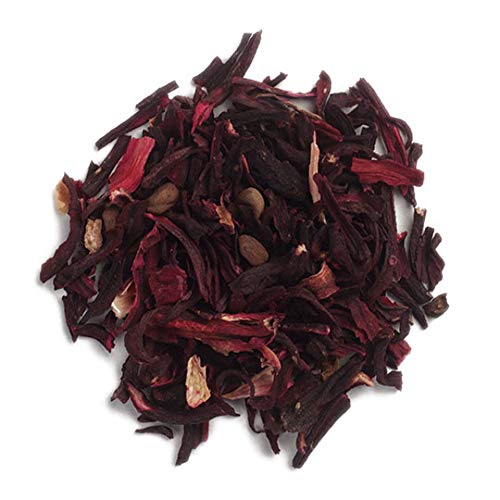
Hibiscus sabdariffa, also called roselle, is the species behind most dried hibiscus products on the market. What gets sold as "hibiscus flowers" in bulk are technically the calyces — the fleshy, deep-red outer structures that form after the petals drop. They carry the tart, cranberry-like flavor and the anthocyanin pigments that make hibiscus valuable in teas, extracts, and natural food coloring. Knowing this prevents a lot of confusion when reading product descriptions, especially when distinguishing culinary varieties from ornamental ones that have no practical use in the kitchen or the apothecary.
For gardeners who want to grow their own supply alongside purchasing dried product, Trinjal's guide to medicinal and herbal plants to grow at home provides solid growing context for hibiscus and similar herbs. Those ready to process a harvest into extracts will find the guide to making herbal extracts and tinctures a useful companion. Tools and equipment that support hands-on herb work are covered in the gardening reviews section.
Contents
The hibiscus genus contains hundreds of species, but only Hibiscus sabdariffa is widely sold for culinary and medicinal use in dried bulk form. It's a warm-season annual that thrives in tropical and subtropical climates, with major commercial production in Egypt, China, Thailand, Sudan, and Mexico. The calyces are harvested after blooming, then dried and optionally cut and sifted to remove stems and coarse debris.
Ornamental varieties like Hibiscus rosa-sinensis are a different matter entirely — bred for showy flowers, not calyx yield, and not suitable for culinary or herbal use. Mislabeled products do appear in the market, which is why species identification on the label matters. Reputable suppliers will specify Hibiscus sabdariffa or the abbreviation "H. sabdariffa" clearly. If a product only says "hibiscus flowers" without species information, it is worth contacting the supplier before committing to a bulk order.
Most bulk suppliers offer two processing options:
For most home herbalists and tea drinkers, cut and sifted is the practical choice. Whole calyces suit those doing artisan food work where the calyx shape contributes to the final product's appearance.
The per-ounce price advantage is the clearest argument for bulk buying. A 1 oz retail packet can cost $3–5, while a 1 lb bulk bag typically runs $10–18 — a savings of 60–75% per ounce. For daily tea drinkers or small-batch product makers, the math adds up fast. Beyond cost, there are other genuine advantages:
Request a certificate of analysis (COA) when ordering from a new bulk supplier — it confirms purity, moisture content, and absence of contaminants before committing to a large quantity.
Bulk buying only pays off if the product actually gets used before it degrades. Dried hibiscus stored properly lasts 12–24 months, but poor conditions — humidity, light exposure, temperature fluctuation — can compress that window considerably. A 5 lb order that sits in a warm garage and develops mustiness is not a bargain at any price per ounce.
Other drawbacks worth considering:
Starting with a 1 lb order — even at a slightly higher per-ounce cost — is a rational hedge for first-time bulk buyers. It establishes a baseline for quality evaluation without significant financial risk.
Prices vary by quantity, organic certification, and supplier type. The figures below reflect typical market pricing for cut-and-sifted dried hibiscus calyces from established herbal suppliers in the United States. Prices shift with harvest conditions and supply chain costs, so these should be treated as reference ranges rather than fixed figures.
| Quantity | Typical Price Range | Approx. Cost per Ounce | Best Suited For |
|---|---|---|---|
| 1–4 oz (retail) | $3–$8 | $2.00–$2.50 | Testing, one-time use |
| 1 lb (bulk starter) | $10–$18 | $0.63–$1.13 | Regular home use, quality evaluation |
| 2–5 lb | $18–$50 | $0.56–$0.90 | Avid tea drinkers, small-batch herbalists |
| 5–25 lb | $40–$160 | $0.38–$0.50 | Small businesses, herbal co-ops, serious hobbyists |
| 25 lb+ | $100–$320+ | $0.25–$0.40 | Commercial production, wholesale buyers |
Certified organic hibiscus typically costs 20–40% more than conventional product. Whether that premium is justified depends on the intended use. Organic certification means the calyces were grown without synthetic pesticides and processed without irradiation — both meaningful considerations for daily consumption or medicinal formulations.
USDA Organic and Kosher certifications appear most often on reputable bulk products. Kosher certification, while primarily a religious designation, also reflects a level of processing oversight that some buyers find useful as a secondary quality indicator. Non-irradiation labeling carries separate significance — irradiation extends shelf life but can degrade anthocyanin content, which is a core reason people use hibiscus in the first place. For casual occasional use, conventional product at a lower price point is a defensible choice. For daily preparation or retail product formulation, the organic premium is generally worthwhile.

Dried hibiscus is not especially fragile, but it degrades noticeably under the wrong conditions. The anthocyanins responsible for the deep crimson color and antioxidant activity are particularly sensitive to light and oxygen. Protecting these compounds preserves both potency and flavor for the full expected shelf life.
Large bulk orders (5 lb and above) are best divided into working stock — a smaller jar in regular rotation — and reserve stock in sealed bags. This limits how often the main supply is exposed to ambient air and reduces cumulative humidity contact.
Cut and sifted hibiscus requires no prep before most applications. For tea, the standard starting point is 1–2 tablespoons per 8 oz of boiling water, steeped 5–10 minutes. Longer steeping concentrates tartness and deepens color. Cold-steeping in the refrigerator overnight produces a milder, slightly sweeter result. For extracts and tinctures, the hibiscus is typically macerated in alcohol or food-grade glycerin over several weeks — the full process is covered in the guide to making herbal extracts and tinctures. Whole calyces used for culinary purposes benefit from a brief rinse to remove surface dust before simmering.
First-time buyers are frequently drawn to large quantities by the lower per-ounce cost — without having confirmed they'll actually work through the product consistently. A 1 lb bag is the right entry point. It provides enough material to evaluate quality across multiple uses and applications, without creating a storage burden if priorities shift.
Practical starting points for new buyers:
New buyers interested in growing hibiscus at home to supplement their supply will find useful growing context in the guide to medicinal and herbal plants to grow at home.
Regular users — tea blenders, herbalists, small-batch product makers — benefit from a more systematic approach. Once a reliable supplier is identified, ordering in 5–10 lb increments generally offers the best balance of price, freshness management, and storage practicality. Purchasing more than a year's supply at once is rarely advantageous, because even well-stored hibiscus loses brightness and aroma intensity over 18–24 months.
Experienced buyers should track harvest year and batch numbers when suppliers provide them. Hibiscus from a new crop year is noticeably more vivid in color and sharper in aroma than older stock. Suppliers who publish this information demonstrate supply chain transparency — one of the more reliable signals of overall quality commitment. Setting a reorder schedule tied to the roughly 12-month freshness peak keeps inventory cycling rather than aging.
The most frequent complaint among bulk hibiscus buyers is receiving product that looks faded, smells musty, or brews to a weak pink rather than a deep crimson. All of these point to old or improperly stored stock.
Not all bulk hibiscus products are accurately represented. These warning signs suggest a supplier worth avoiding:
Suppliers who publish third-party lab testing results, specify country of origin, and identify the botanical species with precision are the ones worth building a purchasing relationship with. In the herbal bulk market, supply chain transparency is the most reliable proxy for product integrity.
A 1 lb bag is the right starting point for most buyers. It is large enough to evaluate quality across multiple uses — teas, syrups, extracts — without the storage and financial risk of a larger initial order. Scaling to 2–5 lb makes sense once a preferred supplier is confirmed.
Not in practice. Both terms generally refer to dried Hibiscus sabdariffa calyces. The labeling distinction is more marketing than botanical. The same cut-and-sifted product serves equally well for brewing, syrups, jams, and most culinary and herbal applications.
Fresh dried hibiscus is deep crimson to dark burgundy with a sharp, tart scent. Product that has degraded fades to a dull pink or brownish tone and loses its characteristic aroma. Any mustiness indicates moisture damage — the product should not be consumed and the supplier should be contacted about a replacement.
The flavor difference between organic and conventional hibiscus is subtle and varies more by supplier and harvest year than by certification status alone. The practical distinction lies in the absence of synthetic pesticide residues and the non-irradiation requirement — factors that matter most for buyers using hibiscus daily or in health-focused formulations.
Yes. Hibiscus sabdariffa grows well in warm climates and can be grown in large containers in cooler regions. Home-grown calyces supplement purchased dried stock and provide peak freshness during harvest season. The plant requires full sun, well-draining soil, consistent moisture through the growing period, and a long frost-free window to produce a meaningful calyx yield.
The best bulk hibiscus purchase is the one that actually gets used — freshness, correct species, and honest labeling matter more than the lowest price per ounce.
 |
 |
 |
 |

About Truman Perkins
Truman Perkins is a Detroit-based SEO consultant who's been in the business for over a decade. He got his start helping friends and clients get their websites off the ground, and he continues to do so today. In his free time, Truman enjoys learning and writing about gardening - something he believes is a natural stress reliever. He lives with his wife, Jenny, and their twins in Detroit.


Get new FREE Gifts. Or latest free growing e-books from our latest works.
Disable Ad block to reveal all the links. Once done, hit a button below
|
|
|
|
 rinjal