Over 1.5 billion succulent plants are sold globally each year, yet most growers eventually discover that the wrong pot is the single fastest way to kill a drought-tolerant plant that is otherwise nearly impossible to harm. Drainage, airflow, and size all play a direct role in root health — and in 2026, the market for succulent pots has never been more varied or more confusing. Whether you're stacking a windowsill display, hanging a statement planter on your porch, or gifting a charming set to a friend, the pot you choose shapes the outcome of everything else you do.
This guide cuts through the noise. We tested and reviewed the top picks across ceramic, terracotta, hanging, novelty, and rectangular styles so you can make a confident decision without second-guessing yourself at checkout. If you are also growing other plants alongside your succulents, our guide to the best pots for indoor plants covers a wider range of species and container types worth exploring. For now, let's focus on what your succulents actually need.
Browsing more gardening reviews? We cover everything from soil to tools, but pots remain one of the most impactful purchases in any collection. Succulents store water in their leaves and stems, which means they are especially vulnerable to root rot when sitting in excess moisture — making drainage holes and breathable materials non-negotiable features. Keep that baseline in mind as you read through every pick below.

Contents
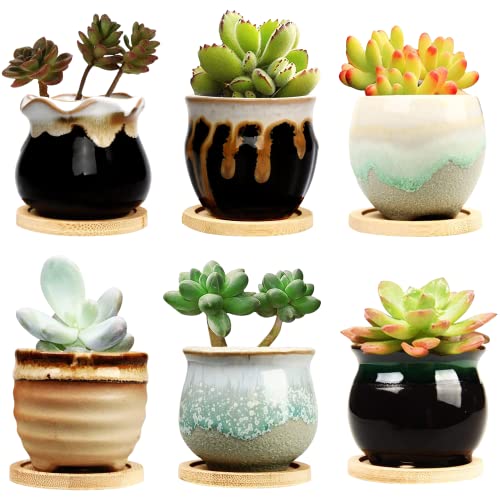



If you have ever tried to find a cohesive mini pot set that doesn't cost a fortune or arrive in a crumbling box, the Brajttt six-pack is a legitimate answer. Each pot measures roughly 2.3 inches wide by 2.15 inches tall — just the right footprint for a small cactus, a rosette echeveria, or a compact haworthia. The transmutation glaze process gives each pot a slightly different color tone, so you get six pots that feel curated rather than mass-produced. Three come with a stand base and three have a flat bottom, giving you flexibility for your arrangement without buying two different sets.
The ceramic is fired at high temperatures from top-quality clay, which means the walls are dense and don't absorb water unpredictably. More importantly, every pot in the set has a drainage hole. That drainage hole is the single most important feature in any succulent pot, and it's surprisingly absent in many decorative mini sets at this price range. The colorful base serial design makes this an easy gifting choice — birthday tables, office desks, and holiday displays all work well here. Just note that plants are not included, and the pots are genuinely tiny, so plan your soil and root ball accordingly.
These six pots punch well above their price bracket for style and function. The combination of drainage, mixed base styles, and attractive glaze means you're not sacrificing aesthetics for practicality or vice versa. For anyone building a windowsill collection or wanting a starter set in 2026, this is a strong, low-risk entry point.
Pros:
Cons:
Most succulent planters cap out at six inches, which leaves larger rosette varieties or grouped plantings cramped and struggling for root space. The LA JOLIE MUSE solves that immediately with an eight-inch diameter — measuring 8 by 6.3 by 3.6 inches overall — that gives mature succulents and smaller bonsais room to breathe and spread. The design reads as premium without being flashy: a cement-gray hand-poured ceramic body with rose-gold rim detailing that looks intentional and sophisticated in any modern or minimalist interior.
The walls are 4mm thick, which is noticeably sturdier than budget competitors. You're not going to knock this over and shatter it on a tile floor the way you might with a thinner planter. The build quality here genuinely justifies the price — this is a pot you buy once and keep for years rather than replacing every season. It's handmade, which means you may notice slight variations in glaze or rim texture from unit to unit. That's a feature of artisanal ceramics, not a defect.
If you grow aloe alongside your succulents — a common pairing since both share drought-tolerant care — our round-up of the best pots for aloe plants highlights several large ceramic options that complement this LA JOLIE MUSE style. For a single standout pot on a console table, entryway shelf, or outdoor patio corner, this eight-inch gray planter earns a top spot in 2026.
Pros:
Cons:
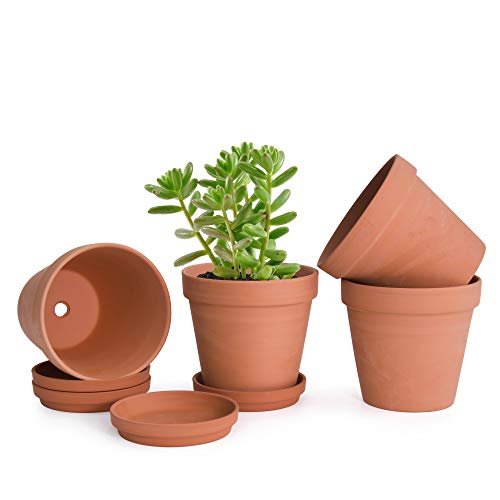
Terracotta is not trendy in the same way matte ceramic or marbled glaze is, but it remains the gold standard material for succulent health. The porous clay walls allow air and moisture to exchange through the pot sides — not just through the drainage hole — which dramatically reduces the risk of root rot for overwatered plants. D'vine Dev's six-inch terracotta pots are fired at high temperatures from natural clay, giving them a smooth matte finish that looks clean and intentional rather than rustic and rough. They come with saucers and a tray, which solves the surface-protection problem right out of the box.
Each pot measures 5.5 inches tall with a 5.9-inch top outside diameter — a practical mid-size that works for a wide range of succulents, from echeveria and sedum to larger haworthia clumps. The elegant simplicity of the design is actually an asset. Terracotta ages beautifully, developing a subtle patina over time that makes a collection look lived-in rather than staged. The saucers are proportionate and well-made, not afterthoughts.
If you use well-draining soil alongside these pots — which you absolutely should — check out our guide to the best organic potting soils for container gardening for mix recommendations that pair well with terracotta's breathability. These D'vine Dev pots are particularly worth considering if you tend to water on instinct rather than on a schedule, because the material gives you a natural buffer against moisture buildup.
Pros:
Cons:
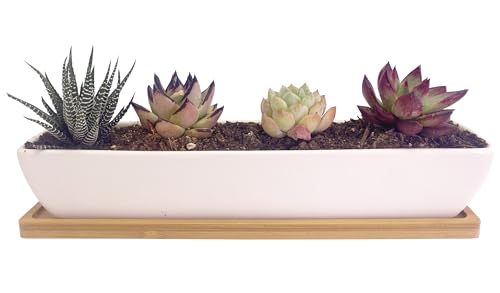
Rectangular planters are a practical solution for window sills, office desks, and narrow shelves where circular pots just don't fit efficiently side by side. The SWONVI measures 11 by 2.28 by 1.73 inches — a long, low-profile trough that fits three to four small succulents in a clean row. The white ceramic finish is bright and modern, and the included bamboo saucer adds an organic contrast that keeps the whole setup from looking clinical. Each planter has a drainage hole, which is especially important in a shallow trough shape where water can pool quickly.
The ceramic construction is solid for the price. White ceramic shows water stains and soil marks more readily than darker finishes, so you'll want to wipe down the outside every few weeks if cleanliness matters to you. The shallow depth — under two inches — means this is strictly for small, compact succulents. A large echeveria or sedum with a deep root system won't thrive here. Stick with haworthia, lithops, or similarly compact species and you'll be fine.
For an office desk or kitchen window that needs a contained, linear arrangement, this rectangular SWONVI planter is a well-made, affordable choice. Just handle it with care — ceramics at this price point are inherently fragile, and the manufacturer makes that explicit. Unbox it carefully and set it in a low-traffic spot.
Pros:
Cons:
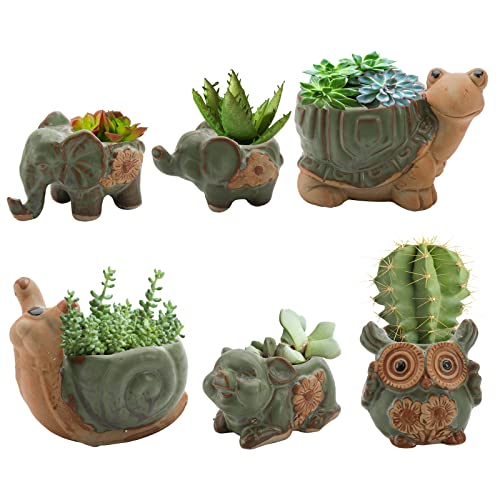
Not every succulent pot needs to be understated. The Okllen six-pack features six animal-shaped ceramic planters — an owl, turtle, two elephant styles, a pig, and a snail — each with its own personality and proportions. The owl measures 2.8 by 2.4 by 2.7 inches, the snail is the largest at 4.5 by 3.4 by 4 inches, and the rest fall somewhere in between. All six are made from premium ceramic clay fired at high temperature, so they are genuinely sturdy and glazed to a smooth, colorful finish. Each has a drainage hole in the bottom.
These pots are purpose-built for gifting — a birthday, housewarming, or holiday present for someone who loves plants but also appreciates a little whimsy in their space. Kids and desk collectors especially appreciate the character design. Beyond succulents, these work well for small bonsai, mini cacti, ferns, or even as a desktop container for pens or small accessories. The versatility is genuine, not just marketing language.
From a plant-care standpoint, the drainage holes and ceramic construction tick the right boxes. The size range across the six animals means your planting options are somewhat limited to very small plants, but that's consistent with the decorative intent. If you're buying this for aesthetics first and horticulture second, it delivers exactly what it promises.
Pros:
Cons:
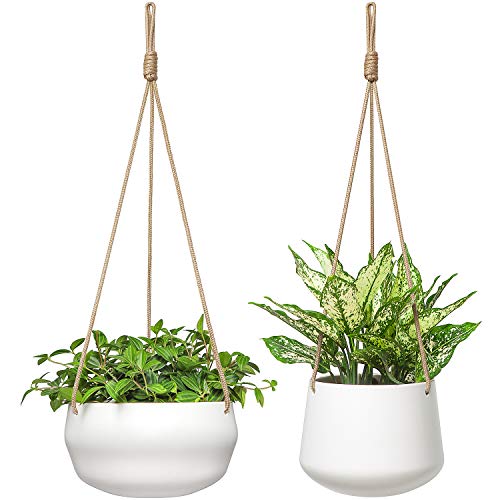
Hanging planters solve a specific problem: you want greenery at eye level or overhead without occupying shelf or table space. The Mkono set includes two ceramic planters — a shallow 8-inch wide by 4.5-inch tall unit and a deeper 6-inch wide by 5.3-inch tall unit — both in matte white glaze with polyester rope hangers. Total hanging height is 26 inches. The two different depth profiles are a genuinely thoughtful design choice: the shallow wide-mouth bowl lets light reach the soil directly, ideal for sun-loving succulents, while the deeper narrow pot gives trailing or rooting plants the vertical space they need.
Both pots weigh over two pounds each — the shallow one is 2.2 lbs and the deeper 2.4 lbs — so you need to mount these into studs or use proper ceiling anchors. A drywall anchor alone won't be reliable long-term once a plant and soil are added. The matte white glaze is versatile enough to fit modern, Scandinavian, bohemian, and farmhouse interiors equally well. The geometric porcelain construction looks far more expensive than it is.
For a patio, balcony, or porch with limited floor space, this set creates vertical visual interest without major investment. Succulents hang beautifully in the shallow bowl version, and the polyester rope is strong and UV-resistant enough for outdoor partial-shade placement. Plants are not included, and you'll want a well-draining soil mix to prevent moisture retention against the ceramic walls.
Pros:
Cons:
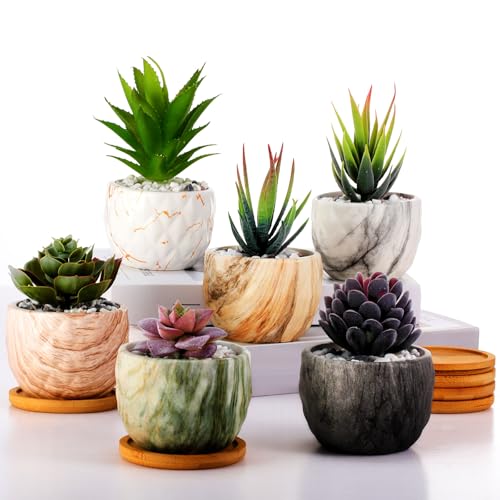
The Ziliny six-pack hits a design sweet spot that many plant collectors actively search for: modern marbling aesthetics in a compact, affordable set with proper drainage. Each pot measures 3.35 by 2.56 inches with a matching bamboo drainage tray at 3.54 inches in diameter and 0.39 inches tall. The matte finish gives the marbled surface a contemporary, restrained look that works in offices, apartments, and gallery-style display arrangements. You receive six pots and six bamboo trays, all packaged together — a complete setup with nothing missing.
The ceramic is fired at high temperatures, which produces a dense, reliable wall that resists cracking, fading, and deformation over years of regular use. The bamboo trays are a notable upgrade over cheap plastic saucers at this price point, adding a natural texture that contrasts well with the ceramic body. Each pot has a drainage hole, confirming that Ziliny didn't sacrifice function for aesthetics.
At 3.35 inches, these are small pots — but meaningfully larger than the mini sets in this roundup, making them a better fit for slightly more established succulents that need room to develop. They're appropriate for haworthia, gasteria, sedum, or any compact rosette variety. This set makes an excellent gift in 2026 or a thoughtful addition to a well-curated plant shelf. If you want a cohesive, stylish collection without overspending, this is one of the strongest value propositions we reviewed.
Pros:
Cons:
If there is one rule you take away from this entire guide, let it be this: every succulent pot must have at least one drainage hole. Succulents evolved in semi-arid environments where water drains quickly through sandy, rocky soil. When excess water cannot escape the pot, it collects around the root zone and creates the anaerobic conditions that cause root rot — a fast and usually fatal process. Decorative pots without holes can work as cachepots (outer decorative containers for a separate inner nursery pot), but they should never come into direct contact with your plant's root system long-term. Check the product listing specifically before purchasing, because product photos don't always show the underside of the pot.
Terracotta and unglazed clay are breathable materials — moisture evaporates through the walls as well as through the drainage hole, which keeps the root zone drier between waterings. This is ideal for succulents, especially if you tend to water on a casual or inconsistent schedule. Ceramic and glazed pots retain moisture longer because the glaze seals the porous clay surface. That doesn't make ceramic a bad choice — millions of healthy succulents thrive in ceramic pots — but it does mean you need to water less frequently and monitor soil moisture more carefully. Plastic is the most moisture-retaining material and generally the least recommended for succulents unless you have a well-draining soil mix and disciplined watering habits.
Choosing a pot that is too large for your succulent is one of the most common beginner mistakes. A large volume of soil around a small root system stays wet far longer than a right-sized container does, which again increases root rot risk. The general rule is to choose a pot that is one to two inches wider than the plant's current root spread. If you're repotting a two-inch rosette, a three to four-inch pot is the right target. Bigger is not better here — it's actively counterproductive. If you're building a grouped arrangement in a single trough or bowl, account for the combined root spread of all the plants you're adding.
Most ceramic and terracotta pots are suitable for both indoor and outdoor use, but outdoor conditions add variables you need to account for. Freeze-thaw cycles crack terracotta reliably if water has been absorbed into the walls — bring terracotta inside during winter if you live in a freezing climate. Glazed ceramic handles temperature fluctuation better but adds weight, which becomes a factor on elevated shelves or balconies with load limits. UV exposure fades some glazes over time, particularly lighter-colored finishes. If outdoor durability is your priority, check manufacturer notes for freeze-resistance ratings or choose pots specifically marketed for year-round outdoor use.
Yes, without exception. Succulents are highly susceptible to root rot when their roots sit in stagnant moisture. A drainage hole allows excess water to escape after watering, preventing waterlogged soil. You can use a decorative pot without a drainage hole as an outer cachepot — just set a separate nursery pot with drainage inside it and remove the inner pot when watering.
Terracotta and unglazed ceramic are the most forgiving materials because they are porous — air and moisture move through the walls, keeping the root zone drier between waterings. Glazed ceramic is also a solid choice as long as you water carefully. Plastic retains moisture the longest and is generally the least recommended material for succulents, though it can work if your soil mix drains well and you water infrequently.
The most reliable signs are roots growing through the drainage hole, roots visibly circling the soil surface, or the plant noticeably outgrowing the pot's diameter. Most succulents need repotting every one to two years. Choose a new pot that is one to two inches wider than the current container and always use fresh, well-draining succulent or cactus potting mix when you repot.
Absolutely. Both succulents and cacti share nearly identical care requirements — they prefer well-draining soil, infrequent watering, and breathable containers with drainage holes. Any pot that works for succulents works for cacti and vice versa. The same sizing rules apply: choose a pot that gives just one to two inches of clearance around the root ball rather than a large, oversized container.
Ceramic pots work well outdoors in mild climates. In areas with hard winters and freeze-thaw cycles, glazed ceramic holds up better than terracotta because the glaze reduces water absorption into the pot walls. Unglazed terracotta can crack when absorbed water expands during freezing. If you leave pots outside year-round, check whether the manufacturer rates them as frost-resistant, or move them indoors before the first freeze.
For a single small to medium succulent — a standard echeveria, haworthia, or sedum — a pot between three and five inches in diameter is typically the right fit. This gives just enough soil volume to anchor the roots and retain a small reserve of moisture without creating the waterlogged conditions that lead to rot. Scale up only when the plant's root spread genuinely fills the current container.
 |
 |
 |
 |

About Truman Perkins
Truman Perkins is a Detroit-based SEO consultant who's been in the business for over a decade. He got his start helping friends and clients get their websites off the ground, and he continues to do so today. In his free time, Truman enjoys learning and writing about gardening - something he believes is a natural stress reliever. He lives with his wife, Jenny, and their twins in Detroit.


Get new FREE Gifts. Or latest free growing e-books from our latest works.
Disable Ad block to reveal all the links. Once done, hit a button below
|
|
|
|
 rinjal