Which camellia oil actually delivers on the promises of silky, luminous skin — and which ones are just pretty packaging with mediocre results? If you've spent any time researching natural face oils in 2026, you already know the market is flooded with options. The good news: Oshima Tsubaki Camellia Seed Oil stands above the rest for pure, traditional Japanese beauty, and we'll show you exactly why throughout this guide.
Camellia oil — also called tsubaki oil — has been a cornerstone of Japanese skincare for centuries. Geishas famously used it to maintain porcelain-smooth complexions, and modern science has confirmed what those women already knew: camellia oil is exceptionally rich in oleic acid, squalene, and antioxidant vitamins that penetrate deeply without leaving a greasy residue. It works beautifully on dry, mature, oily, and combination skin alike — a rare feat for any single ingredient.
Whether you're hunting for a pure single-ingredient oil, a luxurious gold-infused treatment, or a camellia-based cleanser that respects your skin barrier, you'll find it in this roundup. We tested and researched the top picks available on Amazon, drawing on ingredient lists, user feedback, and formulation science to give you clear, actionable recommendations. If you want to explore how camellia oil compares to other popular beauty oils, check out our deep-dive on beauty oils: sources, uses, and benefits — it's a great companion read. Now let's get into it.
Contents





If you want the real thing — authentic Japanese tsubaki oil with nothing added — the Oshima Tsubaki is where your search ends. This oil has been produced on Oshima Island in Japan using camellia seeds harvested from trees that have grown on volcanic soil for generations. The result is a remarkably pure, golden oil that absorbs within seconds and leaves your skin feeling conditioned rather than coated. It's 100% single-ingredient camellia seed oil, which means no fillers, no fragrance, no carrier oil blends — just the raw botanical in its most effective form.
On the face, a single drop warmed between your palms spreads beautifully across the entire complexion. You'll notice it doesn't sit on top of skin the way heavier oils do. The oleic acid content closely mirrors your skin's own sebum, which is why it integrates so naturally. Use it as a last step in your evening routine, mix a drop into your moisturizer, or apply it to damp skin right after cleansing for maximum absorption. It works equally well on hair ends and cuticles, making it one of the most versatile bottles you'll own. The 2.03 fl oz size is compact but economical — a little genuinely goes a long way here.
The English-language packaging is specifically designed for the US market, and the instructional leaflet walks you through application techniques drawn from traditional Japanese beauty rituals. For anyone who has been curious about incorporating tsubaki oil into their routine but wasn't sure where to start, this is the most approachable and trustworthy entry point you'll find in 2026.
Pros:
Cons:
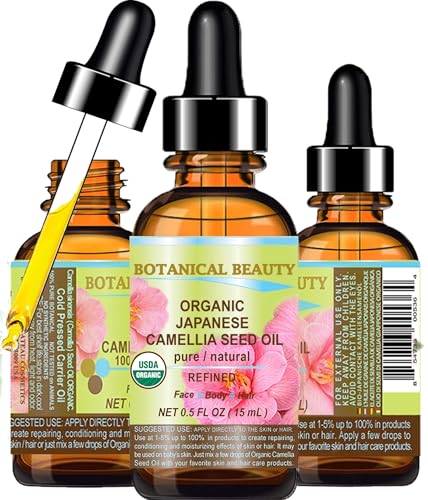
For shoppers who prioritize certified organic sourcing above all else, the Botanical Beauty Camellia Seed Oil is a compelling option. Cold-pressed and completely unrefined, this carrier oil retains the full spectrum of vitamins and antioxidants that the camellia seed naturally contains. It's hypoallergenic, completely unscented, and free of preservatives — a clean-ingredient profile that's harder to find than you'd think in this category. The cold-press process is critical because heat extraction degrades the oleic acid content and diminishes the oil's anti-aging effectiveness.
This oil is specifically marketed for dry and mature skin, and those skin types will see the most dramatic results. The high concentration of Vitamins A, B, C, and E works synergistically to soften fine lines, improve elasticity, and restore that natural glow that dehydrated skin loses over time. It layers well under a moisturizer or can be used alone as a serum replacement. For oily skin types, the same non-greasy absorption still applies — camellia oil has a comedogenic rating of 1, meaning it's extremely unlikely to clog your pores even with daily use. If you're familiar with other natural face oils like those reviewed in our best black seed oil roundup, you'll appreciate that camellia oil offers a far lighter texture while delivering comparable nutrient density.
The 15ml trial size is smart for first-time buyers who want to test compatibility before committing to a larger bottle. Given the "a little goes a long way" nature of pure carrier oils, this small bottle lasts considerably longer than you'd expect. It's cruelty-free, never tested on animals, and it blends easily with essential oils if you want to customize your treatment.
Pros:
Cons:
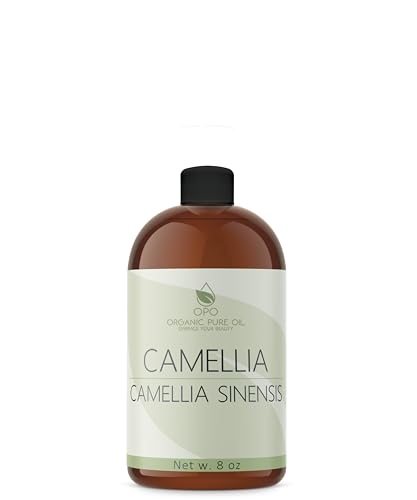
If you use camellia oil regularly — on your face, in your hair, and on your body — buying a small bottle every few weeks gets expensive fast. The OPO Camellia Seed Oil solves that problem with an 8-ounce bulk format that dramatically lowers the per-use cost without sacrificing quality. It's pure, unrefined, cold-pressed, and non-GMO, checking the same boxes as the more boutique options on this list. The extra-virgin designation matters because it confirms no heat or chemical solvents were used during extraction, preserving the full fatty acid and antioxidant profile.
The OPO formula contains squalene alongside Vitamins A, B, C, and E — the same key actives you'd find in premium skincare serums, but in their natural, bioavailable form. Squalene is particularly valuable because it mimics the skin's own lipid barrier, which is why camellia oil feels so immediately comfortable on application. Your skin recognizes it and absorbs it readily. This makes OPO a strong choice for body care rituals, where you'd naturally use more product per session — think post-shower oil application on arms, legs, and decolletage, or as a carrier oil for homemade body scrubs and massage blends.
On the face, this oil performs exactly as well as the smaller-format options. The non-GMO and vegan credentials add peace of mind, and the bulk size comes in packaging that keeps the oil stable and away from light. If you've been exploring natural oils for multiple uses — similar to the readers who enjoy our best avocado oil reviews — you'll immediately understand the appeal of having a large, versatile bottle on hand for skin, hair, nails, and body in one go.
Pros:
Cons:
TATCHA's Gold Camellia Beauty Oil occupies a different tier entirely. This isn't a single-ingredient carrier oil — it's a formulated luxury treatment that uses extra-virgin Japanese camellia oil as its hero ingredient and elevates it with 23-karat gold flakes. The effect is genuinely luxurious: the oil glides on with a subtle warmth, the gold flakes catch the light briefly before blending in, and your skin is left with an immediate radiance that you don't get from unformulated oils alone. TATCHA's formulation philosophy is rooted in Japanese beauty traditions modernized with contemporary cosmetic science, and the results show.
The multi-tasking versatility here is impressive. You can press a few drops into your face before moisturizer, work it through dry hair ends, or smooth it over a bare shoulder as a luminizing body treatment before an event. The 30ml bottle is small but highly concentrated — a few drops genuinely cover the full face, so it lasts longer than the size suggests. The non-greasy finish means you won't feel oily during the day, and it layers cleanly under makeup without pilling.
This is the pick for anyone who wants their camellia oil experience to feel like self-care rather than a clinical skincare step. The fragrance is minimal and tasteful, the packaging is elegant, and the gold flakes add a sensory element that pure oils simply can't replicate. You're paying a premium, and you know it — but for special occasions, gifts, or a daily routine that you genuinely look forward to, TATCHA delivers on its promise. Browse the full gardening and beauty reviews section for more expert-picked recommendations in natural wellness.
Pros:
Cons:
DHC's Deep Cleansing Oil is one of the most recognized oil cleansers in the world for a reason: it works. The formula is built around olive oil — specifically "Flor de Aceite," the first-press essence of organic olive oil — but camellia oil plays a supporting role that makes this cleanser particularly effective for conditioning and protecting the skin barrier during the cleansing process. The oil-cleansing method it's designed for is the foundation of Japanese skincare, and DHC made it accessible to Western markets decades ago with this very product.
Apply it to dry skin, massage it over your face in gentle circular motions, and watch it dissolve sunscreen, foundation, waterproof mascara, and stubborn eyeliner without any harsh scrubbing. Add a little water and it emulsifies to a milky texture that rinses cleanly — no oily residue left behind. That's the key distinction between a quality oil cleanser and a poor one: how completely it rinses. DHC rinses completely, leaving skin hydrated and soft but never feeling like you skipped the rinse step.
For anyone who has struggled with cleansers that strip the skin or break down the moisture barrier over time, this is a revelation. The 6.7 fl oz bottle is generous enough for daily double-cleansing without running out quickly. It's fragrance-free, colorant-free, and suitable for all skin types — including sensitive skin. If you currently use a harsh foaming cleanser and wonder why your skin feels tight afterward, switching to DHC's oil cleanser is one of the most impactful single changes you can make to your routine in 2026.
Pros:
Cons:
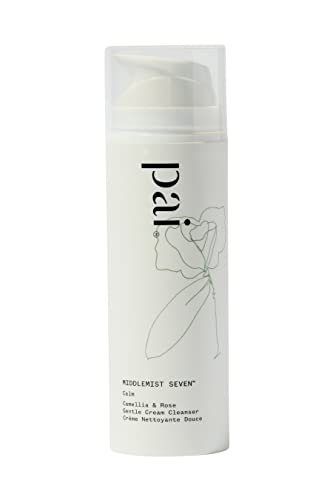
PAI Skincare has built its entire brand around formulations that work for the most reactive, sensitive skin types. Their Middlemist Seven Camellia and Rose Cream Cleanser is a prime example of that philosophy: it's luxuriously gentle, deeply nourishing, and it cleanses without disrupting the skin's delicate pH or stripping its natural oils. Camellia sits at the heart of this formula, paired with rose for an added layer of soothing and anti-inflammatory support. If your skin tends to flare up, redden, or feel compromised after cleansing, this is the product that changes that experience.
The cream texture is unlike a traditional oil cleanser or gel — it's rich and cushioning, almost like washing your face with a gentle lotion. It lifts dirt and makeup effectively while leaving a protective film of moisture that keeps skin balanced post-cleanse. The formula is certified organic, vegan, and free from the typical irritants that plague most cleansers: synthetic fragrance, parabens, sulfates, and artificial color. PAI is also manufactured in a dedicated facility that minimizes cross-contamination risk, which matters enormously for people with true skin sensitivities or conditions like rosacea and eczema.
The 5 oz / 150ml tube is generous and comes with a spatula for hygienic dispensing. You'll feel the difference from the first use — the familiar tightness and discomfort that follows cleansing simply doesn't happen. For anyone who has been managing reactive skin for years and written off cleansers as "just something to tolerate," PAI's Middlemist Seven reframes that experience entirely. It's the cleanser that makes your skin feel like it's been on holiday, as the brand puts it. That's not marketing fluff. That's an accurate description.
Pros:
Cons:
The extraction method is the single most important factor in camellia oil quality. Cold-pressed oils are extracted mechanically at low temperatures, which preserves the fatty acids, vitamins, and antioxidants in their natural state. Refined oils undergo heat and sometimes chemical processing, which strips out many of the actives that make camellia oil effective in the first place. Always look for "cold-pressed" and "unrefined" on the label when buying a pure carrier oil for facial use. Extra-virgin is another positive indicator, borrowed from olive oil terminology, that signals a first-press cold extraction.
For formulated products like the TATCHA or PAI options on this list, the carrier oil within the formula is processed before blending — what you're evaluating there is the overall formulation quality rather than the raw oil alone. Both approaches are valid; they serve different purposes in your routine.
Pure camellia oil should have one ingredient: Camellia japonica seed oil, or sometimes Camellia sinensis for tea-derived variants. If the ingredient list runs longer than that on a product marketed as "pure camellia oil," keep looking. Certifications worth trusting include USDA Organic, COSMOS Organic, and Non-GMO Project Verified. Cruelty-free and vegan certifications from recognizable bodies (Leaping Bunny, PETA) add ethical assurance.
Be especially skeptical of very low-priced "camellia oils" with vague sourcing. Adulteration with cheaper oils like sunflower or soybean is a real problem in the carrier oil market, and a compromised oil won't deliver the skin benefits you're after. Buying from established brands with traceable sourcing — like Oshima Tsubaki's Oshima Island provenance — is the safest approach.
Camellia oil has a comedogenic rating of 1 on a scale of 0–5, making it one of the safest face oils across all skin types. That said, your specific skin concerns should guide which format you choose:
Decide upfront whether you want a single-ingredient carrier oil or a formulated product that uses camellia as part of a broader formula. Pure oils like Oshima Tsubaki and OPO are maximally versatile — you control how you use them, mix them, and layer them. Formulated products like TATCHA's Gold Oil or PAI's cleanser are designed for specific applications and deliver a curated experience with less experimentation required.
Neither approach is superior — they're complementary. Many experienced skincare enthusiasts use a pure camellia oil as their evening facial oil and a camellia-based cleanser as their morning wash. Building that kind of layered routine around a single hero ingredient is one of the most effective and economical approaches to natural skincare you can take.
Yes, camellia oil is one of the best facial oils available. Its high oleic acid content — typically 80–85% — closely resembles the skin's natural sebum, which is why it absorbs so readily and conditions without clogging pores. It's rich in antioxidant vitamins A, C, and E, supports skin elasticity, and works across all skin types. Japanese women have relied on it for centuries as a core beauty oil, and modern dermatological research backs its efficacy for hydration and anti-aging support.
Camellia oil has a comedogenic rating of 1 out of 5, making it extremely unlikely to clog pores. It's one of the lightest natural face oils available, despite being rich in nutrients. Even oily and acne-prone skin types typically tolerate it well. If you're introducing any new product to your routine, do a patch test first — but camellia oil is widely regarded as safe and non-comedogenic for the vast majority of people.
Warm 1–3 drops between your palms and press gently into your skin — don't rub aggressively. Apply it to slightly damp skin after cleansing and toning for better absorption, or use it as the last step in your PM routine to seal in moisture. You can also mix one drop into your daily moisturizer to boost its hydrating effect. A little genuinely goes a long way with high-quality pure camellia oil.
Camellia oil is high in oleic acid (monounsaturated), making it deeply moisturizing, fast-absorbing, and excellent for dry, mature, and normal skin. Rosehip oil is high in linoleic acid (polyunsaturated) and is particularly prized for its vitamin A (retinol precursor) content and ability to fade hyperpigmentation. Camellia oil absorbs faster and leaves less residue; rosehip oil is more targeted for scars and dark spots. Both are valuable, and many people use them alternately depending on their skin's seasonal needs.
Yes, daily use is not only safe but recommended for optimal results. The skin's barrier function improves with consistent lipid replenishment, and camellia oil's compatibility with skin's natural sebum makes it ideal for everyday use. Apply it morning, evening, or both depending on your skin's dryness level. If you find it too rich for daytime in humid weather, stick to evening application and adjust from there.
Both Japanese (Camellia japonica) and Chinese (Camellia oleifera) camellia oils are high-quality and rich in oleic acid, but there are subtle differences. Japanese tsubaki oil — particularly from Oshima Island — is traditionally cold-pressed in small batches from a specific cultivar prized for centuries in Japanese beauty rituals. Chinese camellia oil is produced at larger scale and is equally nutritious, though the regional terroir and cultivation methods differ. Both are excellent choices; the Japanese variety carries a stronger cultural heritage and often commands a premium for that reason.
 |
 |
 |
 |

About Christina Lopez
Christina Lopez grew up in the scenic city of Mountain View, California. For eighteen ascetic years, she refrained from eating meat until she discovered the exquisite delicacy of chicken thighs. Christina is a city finalist competitive pingpong player, an ocean diver, and an ex-pat in England and Japan. Currently, she is a computer science doctoral student. Christina writes late at night; most of her daytime is spent enchanting her magical herb garden.


Get new FREE Gifts. Or latest free growing e-books from our latest works.
Disable Ad block to reveal all the links. Once done, hit a button below
|
|
|
|
 rinjal