reviewed by Christina Lopez
If you want the single best enclosure for an adult ball python in 2026, the Reptile Habitats 4x2x2 120 Gallon PVC Enclosure is your answer — it assembles in under 30 minutes, handles high humidity without warping, and gives your snake the floor space it genuinely needs. But not every keeper needs that exact tank, and the right choice depends heavily on your snake's age, your budget, and your setup goals.
Ball pythons are among the most popular pet snakes in the world, and for good reason — they're docile, manageable in size, and endlessly variable in morph. What trips up new keepers more than anything else is the enclosure. Pick something too small and your snake stress-hides constantly. Pick something with poor humidity retention and you're fighting stuck sheds every cycle. Pick something built from the wrong material and you're replacing it within two years. This guide cuts through the noise and tells you exactly what to buy based on your situation.
We've broken down seven of the most recommended terrariums on the market in 2026, covering everything from starter tanks for juvenile pythons to spacious PVC enclosures built for long-term adult housing. Whether you're setting up your first enclosure or upgrading from a cramped starter tank, you'll find the right fit below. And if you're also thinking about live plants inside the enclosure, our guide to tropical terrarium plants pairs well with what you'll find here — ball pythons thrive in bioactive setups. For more reviewed picks across the pet space, browse our full pet reviews section.
Contents




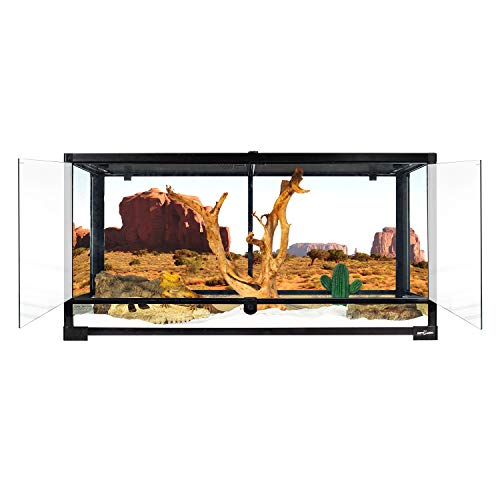

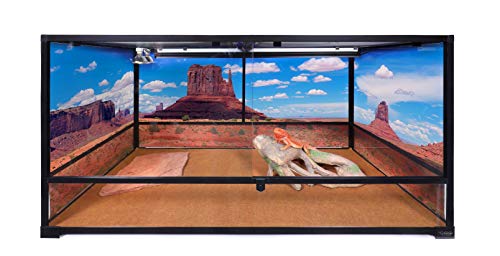

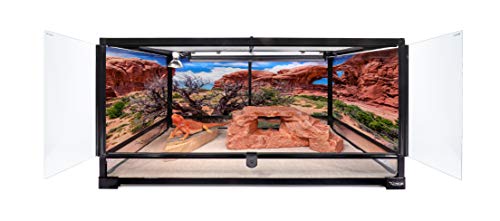
The Reptile Habitats 4x2x2 is the enclosure that experienced ball python keepers recommend most consistently, and after spending time with it, the reason is obvious. The PVC panel construction is the real differentiator here — unlike glass tanks that sweat and crack under sustained high-humidity conditions (ball pythons need 60–80%), PVC shrugs off moisture entirely. The panels don't warp, the frame stays rigid, and the enclosure looks just as good after two years of misting as it did out of the box.
Assembly is genuinely fast. Most keepers report getting the full enclosure together in under 30 minutes without any special tools. The aluminum frame snaps together cleanly, the panels slot in without forcing, and the glass front doors glide smoothly on their tracks. At 4 feet long by 2 feet wide by 2 feet tall, this hits the 8-square-foot floor space that adult ball pythons need for confident exploration and a proper thermal gradient. You can fit a large hide on the cool end, another on the warm end, a water dish, and still have open floor space — which matters more than people realize for reducing stress-related feeding refusals.
The heavy-duty screen top provides enough ventilation to prevent stagnant air while still allowing you to control humidity with cover panels. The enclosure ships knocked down but the included instructions are clear enough that even first-time enclosure builders don't struggle. If you're housing an adult ball python and want an enclosure you won't replace in 18 months, this is the one to buy.
Pros:
Cons:
The REPTI ZOO 30 Gallon is the right starting point if you're housing a juvenile or sub-adult ball python under two feet in length. The 18"x18"x24" vertical design gives you enough interior volume to create proper hides and a humidity gradient without overwhelming a small snake. Oversized enclosures stress juvenile ball pythons — they need to feel secure, and this tank's proportions hit that sweet spot well.
The build quality is solid for the price. Tempered glass panels feel substantial, and the dual-access front opening door makes feeding and spot-cleaning straightforward without disturbing the enclosure setup excessively. REPTI ZOO included mesh ventilation on both the top screen and the left and right side panels, which gives you more airflow control than many competitors at this size. The raised bottom frame accommodates an under-tank heater, and the waterproof base means substrate stays contained even when you're misting heavily for shedding cycles.
One practical note: this is a vertical terrarium designed with rainforest species in mind, so the height-to-footprint ratio favors climbing rather than floor exploration. Ball pythons are primarily terrestrial, so as your snake grows, you'll want to transition to a longer horizontal enclosure. Consider this a high-quality juvenile enclosure rather than a long-term adult home.
Pros:
Cons:
The REPTI ZOO 50 Gallon steps up to a 36"x18"x18" horizontal footprint — a meaningful upgrade from smaller starter tanks, and one that works well for sub-adult to adult ball pythons in the 3–4 foot range. The horizontal layout is exactly what a terrestrial species needs, giving your snake room to stretch out fully and move between a warm hide and a cool side without being forced into an awkward vertical climb.
Construction uses the same tempered glass and screen-top formula that REPTI ZOO applies across their lineup. The front doors open independently, which is a practical feature that experienced keepers appreciate — you can open just one side for feeding, minimizing the opening through which an escape-prone juvenile could bolt. The screen top ventilation supports UVB and infrared light penetration, so if you're running a proper lighting setup (a good UVB tube does real metabolic work even for crepuscular species), this enclosure accommodates it without modification.
The waterproof bottom is a genuine advantage if you keep humidity at the 70–80% range that ball pythons need during the pre-shed phase. Condensation and substrate moisture accumulate at the base rather than leaking out, and the raised frame means you can run a heat mat underneath without improvising a platform. At 50 gallons, this is a comfortable permanent home for most ball pythons under 4.5 feet.
Pros:
Cons:
When you need the largest glass enclosure REPTI ZOO offers, the 67 Gallon at 48"x18"x18" delivers a full 4-foot run that handles even large adult ball pythons comfortably. The upgrade to tempered glass on every panel — not just the front — is significant: you're getting structural integrity that cheaper glass tanks simply can't match, particularly at this footprint where glass stress from substrate weight and humidity cycles is a real concern over time.
The front sliding door is a design choice that experienced keepers will appreciate. Rather than swing-out doors that require clearance space in front of the enclosure, the sliding panel moves laterally along a clean track. The key-lock mechanism is sturdy and positioned at a convenient height. REPTI ZOO also added an upgraded version designation here — the frame connections are tighter and the overall assembly feels more precise than earlier iterations of their large glass line.
The screen top and waterproof base perform exactly as described in the smaller models, but at 48 inches of length you have real flexibility in how you arrange your thermal gradient. A ceramic heat emitter or deep heat projector on the warm end, a hide on each side, a large water dish, and a bioactive substrate setup all fit without cramping. If you're committed to glass rather than PVC, this is the REPTI ZOO model that justifies the investment.
Pros:
Cons:
Carolina Custom Cages built their reputation on functional, no-frills glass terrariums that hold up over years of use, and the 48"x24"x24" is their flagship large enclosure for good reason. The extra depth — 24 inches front to back rather than the 18 inches you see on most competitors — is the defining feature. That 6 inches of extra depth makes a practical difference if you're running a bioactive setup: you have room for a deeper substrate layer, larger decorative elements, and more natural-feeling hides arranged further apart.
The 6.3-inch deep waterproof base tray is genuinely impressive. It keeps any spills, substrate moisture, or water bowl accidents fully contained, and unlike most glass terrariums, substrate debris doesn't work its way into the door tracks over time because of the tray's raised design. The full steel screen mesh top provides strong ventilation, and the sliding doors with key-lock security are among the smoothest-operating door mechanisms in this price range.
Assembly is straightforward, and Carolina Custom Cages' customer support reputation is excellent if you run into any issues. If you're also investing in a quality lighting setup for your ball python — even a modest UVB tube makes a difference for long-term health — check out our coverage of LED grow lights as a comparison point for what quality light penetration looks like in enclosed spaces. At this price and size, the Carolina Custom 48x24x24 is the glass enclosure choice for keepers who want maximum interior volume and a bioactive-ready depth.
Pros:
Cons:
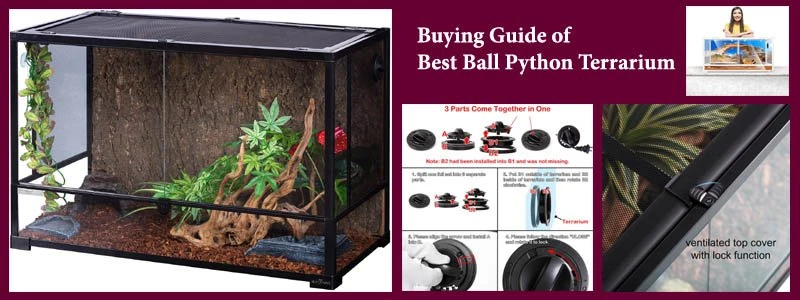
If the Reptile Habitats PVC enclosure sits above your budget but you're set on PVC over glass, this 120-gallon option from a newer manufacturer gives you the same humidity-resistant material advantages at a lower price point. PVC at 48"x24"x24" means you're getting 8 square feet of floor space without the weight penalty of glass — a meaningful practical advantage when you're positioning the enclosure on a stand, moving to a new place, or rearranging a reptile room.
The sliding glass front doors run cleanly on their tracks and the combination lock is secure enough to prevent escapes without requiring a key. PVC construction keeps interior humidity stable with far less effort than glass — if you're tired of fighting with foggers and cover panels to keep your humidity gauge above 65%, switching to a PVC enclosure is often the single biggest quality-of-life improvement ball python keepers make. The viewing experience through the glass doors is clear and unobstructed, so you don't sacrifice aesthetics for function.
Build quality is competent without being exceptional. The PVC panels are solid, the frame connections are secure, and the enclosure holds its shape under normal load. It's not the refined build of the Reptile Habitats V3, but at this price it delivers the essential PVC advantages — humidity retention, light weight, humidity resistance — that glass alternatives simply can't match.
Pros:
Cons:
The smaller of the two Carolina Custom Cages entries, this 36"x18"x18" terrarium is built on the same proven chassis as the larger model but scaled down for keepers housing younger adults or who have space constraints in their reptile room. The functional-without-gimmicks design philosophy is Carolina's trademark, and it shows here — no unnecessary features, no hardware that's likely to fail, just a clean glass terrarium that does its job reliably over years of use.
The 4-inch deep waterproof base tray is shallower than the larger model, but it still keeps substrate and moisture contained without letting debris infiltrate the door tracks. Glass sides resist scratching from substrate material and are easy to spot-clean — wipe down with paper towels and diluted cleaner and you're done. The hinged doors with key-lock security are standard Carolina quality: smooth operation and genuine security against determined escape attempts.
At 36 inches of length and 18 inches of depth, this works as a permanent enclosure for ball pythons under 3.5 feet and as a comfortable temporary home for larger snakes during enclosure maintenance or vet visits. If you're also exploring the idea of setting up a planted bioactive terrarium layer using naturalistic substrate, our roundup of tropical terrarium plants covers species that thrive in the humidity levels ball pythons require. For a snake that's still growing, this enclosure grows with you through the first few years of ownership before you need to step up to the 48-inch models.
Pros:
Cons:
Picking the right enclosure is the most important husbandry decision you'll make as a ball python keeper. Get this right and the rest of the setup — heating, humidity, substrate — becomes far easier to dial in. Get it wrong and you're fighting your equipment constantly. Here's what actually matters in 2026.
The old rule of thumb — "tank length should equal the snake's length" — is outdated and too conservative. Current best practices recommend a minimum of 4 square feet of floor space for adults, with 8 square feet being ideal for snakes over 4 feet. Ball pythons are more active than their reputation suggests, particularly at night, and a properly enriched larger enclosure reduces stress-hiding and feeding refusals significantly.
Don't let anyone sell you on keeping an adult ball python in a 40-gallon breeder permanently. It's a false economy that creates behavioral problems over time.
This is the most significant decision you'll make, and it comes down to one core variable: humidity retention vs. visibility and cost. Glass tanks are beautiful, affordable, and widely available. They are also poor humidity retainers — the screen tops that allow ventilation also allow moisture to escape, which means you're actively fighting to maintain the 60–80% relative humidity ball pythons need. Covering two-thirds of the screen top with aluminum foil or custom panels is a common workaround, but it's a workaround, not a solution.
PVC enclosures solve the humidity problem structurally. The solid walls trap moisture naturally, and you're managing humidity by occasionally misting rather than constantly compensating for ventilation loss. The trade-off is cost — quality PVC enclosures like the Reptile Habitats 4x2x2 cost more upfront than glass alternatives. Over 5–10 years of keeping, the investment is worth it. For a keeper on a tighter budget, a glass enclosure with a screen cover strategy works fine — it just requires more active management.
The features you interact with every day matter more than the ones that look impressive at unboxing. Evaluate any terrarium on these practical criteria:
Bioactive enclosures — substrate systems that incorporate living plants and a cleanup crew of isopods and springtails — are the direction the advanced ball python keeping community is moving in 2026. They reduce odor, provide environmental enrichment, and create genuinely beautiful displays. If this is your goal, your enclosure choice needs to accommodate it.
Bioactive setups need depth. You want at least 4 inches of substrate depth, and ideally 6–8 inches to support robust plant root systems. The Carolina Custom Cages 48"x24"x24" with its 6.3-inch deep base tray and 24-inch front-to-back depth is the best glass option here. The Reptile Habitats 4x2x2 PVC is the best overall option — its humidity retention means the bioactive substrate stays moist consistently without daily intervention. If you're going bioactive, also look into the types of plants that thrive in high-humidity enclosures — our guide to tropical terrarium plants is a good starting reference for species selection.

An adult ball python needs a minimum of 4 square feet of floor space — that's roughly a 48"x12" footprint at bare minimum. In practice, most experienced keepers recommend 48"x18" as a working minimum and 48"x24" or a full 4x2x2 format as the ideal. Female ball pythons grow larger than males (often 4–5 feet versus 3–3.5 feet for males) and benefit from the additional floor space. Bigger is generally better once the snake is past the juvenile stage, as large enclosures with proper hide coverage actually reduce stress rather than increasing it.
PVC is the superior material for ball python keeping from a husbandry standpoint. Ball pythons require 60–80% relative humidity consistently, and glass tanks with screen tops lose moisture rapidly. PVC walls trap humidity naturally, reducing the active management required to maintain proper levels. Glass enclosures work, but they require screen cover panels or other modifications to retain humidity. If budget allows, choose PVC — it's a long-term quality-of-life improvement that most keepers wish they had made earlier.
A 40-gallon breeder (36"x18") is acceptable as a permanent home for smaller adult male ball pythons under 3.5 feet, but it's genuinely too small for most females and any male that exceeds that length. At 40 gallons, you're working at the minimum viable size — the thermal gradient is compressed, hide placement is constrained, and the snake has limited room for the nocturnal exploration behavior that constitutes much of their activity. Use a 40-gallon as a transitional enclosure rather than a permanent home for a full-grown snake.
Ball pythons need a thermal gradient from 88–92°F on the warm side (under the hide, measured at substrate level) down to 76–80°F on the cool side, with an ambient air temperature of 78–80°F throughout. Humidity should stay between 60–80% at baseline, rising to 80–90% during the pre-shed period. Night temperatures can drop to 72–74°F safely. These ranges are non-negotiable for long-term health — chronic low humidity causes respiratory problems and stuck sheds, while chronic overheating causes metabolic stress and feeding refusals.
Glass terrariums require active humidity management because screen tops allow significant moisture loss. The most effective approach combines three strategies: cover 60–70% of the screen top with aluminum foil or custom-cut panels to reduce ventilation and slow evaporation; use a moisture-retaining substrate like coconut fiber, cypress mulch, or a bioactive mix rather than paper towels or reptile carpet; and place the water bowl on the warm side of the enclosure so ambient evaporation contributes to humidity. An automatic misting system or fogger provides consistent humidity maintenance if you find manual misting insufficient.
The research consensus has shifted in recent years — while ball pythons are crepuscular and historically kept without UV, studies now suggest that low-level UVB exposure provides measurable benefits including improved vitamin D3 synthesis and more natural activity cycles. A low-output UVB tube (5.0 or T5 HO 6%) mounted in the enclosure for 10–12 hours daily is now considered best practice by most herpetological societies. It's not strictly required for survival, but it's a meaningful welfare upgrade. Pair it with a deep heat projector or ceramic heat emitter for the thermal gradient rather than relying solely on under-tank heating.
 |
 |
 |
 |

About Christina Lopez
Christina Lopez grew up in the scenic city of Mountain View, California. For eighteen ascetic years, she refrained from eating meat until she discovered the exquisite delicacy of chicken thighs. Christina is a city finalist competitive pingpong player, an ocean diver, and an ex-pat in England and Japan. Currently, she is a computer science doctoral student. Christina writes late at night; most of her daytime is spent enchanting her magical herb garden.


Get new FREE Gifts. Or latest free growing e-books from our latest works.
Disable Ad block to reveal all the links. Once done, hit a button below
|
|
|
|
 rinjal