Black Kow Composted Cow Manure is the best bagged compost you can buy right now — it's reliable, widely available, and delivers consistent results across virtually every garden type. If you're just here for the quick answer, grab a few bags of Black Kow and get planting. But if you want to find the right compost for your specific situation — whether that's a raised bed, a container herb garden, or a sprawling lawn — keep reading, because the right choice matters more than most gardeners realize.
Compost is the foundation of healthy soil, and healthy soil is the foundation of everything else you grow. In 2026, the bagged compost market has expanded significantly, with brands competing on organic certification, odor control, specialty ingredients, and sustainable sourcing. That's great news for you, but it also means there's more noise to cut through. Not all bagged composts are created equal — some are well-aged and nutrient-dense, others are barely broken down and will rob your soil of nitrogen as they finish decomposing. Knowing what to look for saves you money and frustration.

We've dug through the options — literally and figuratively — to bring you this roundup of the best bagged composts available. Whether you're amending a vegetable bed, boosting a container mix, or rehabilitating a tired lawn, there's a product here that fits your needs. These picks work well alongside other gardening products to create a thriving outdoor space. For each product, you'll get a thorough review, honest pros and cons, and a clear sense of who it's best suited for. Let's get into it.
Contents
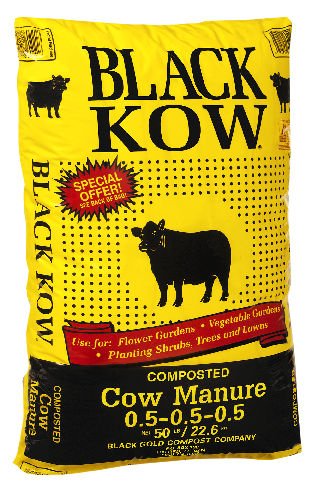





Black Kow has been a staple in the gardening world for decades, and there's a very good reason for that: it works. This 35 lb bag of composted cow manure is one of the most straightforward, no-nonsense products you'll find in the category. The compost is fully aged and processed, which means it won't burn your plants and it won't introduce the pathogens that come with fresh manure. You get a ready-to-use amendment that integrates into your soil immediately, feeding roots at the microbial level and improving both drainage and moisture retention simultaneously.
The texture is dark, crumbly, and consistent — exactly what you want from a well-composted product. It mixes easily into existing beds and breaks apart without clumping. Black Kow excels in vegetable gardens where you need reliable nutrient availability across an entire growing season. Tomatoes, peppers, squash — all of them respond visibly within a few weeks of application. The 35 lb bag gives you enough material to amend a sizable raised bed or work into several container plantings without running out halfway through the job.
The odor is mild and earthy. It's not zero-scent, but it's nothing like fresh manure — you can work with it without gagging, even in a confined space. For the price and the quantity you're getting, Black Kow is the most practical choice for most home gardeners. It's the product I'd recommend to a first-timer and a seasoned grower alike. If you're also dealing with pest issues in your garden, pairing healthy compost with the right aphid killer gives you a one-two punch for plant health.
Pros:
Cons:
If you're gardening in a small space — an apartment balcony, a patio container garden, or even indoors — Charlie's Compost is the product built specifically for your situation. The odor control here is genuinely impressive. It's formulated to be low-odor by design, not just by accident of good processing, and that makes a real difference when you're working in close quarters. The 10 lb bag is compact and manageable, easy to store in a closet or on a shelf without worrying about the smell permeating your living space.
Charlie's Compost is also enriched with biochar, which is a significant differentiator in this category. Biochar dramatically improves the compost's ability to retain nutrients and water in the soil, acting almost like a slow-release reservoir for plant-available minerals. This is particularly valuable for container gardening, where nutrients tend to leach out quickly with repeated watering. The organic certification adds another layer of confidence — you know exactly what's going into your soil and ultimately into your food crops.
The trade-off is price per pound. Charlie's costs more than bulk options like Black Kow when you compare apples to apples. But for the urban gardener who needs a cleaner, more concentrated product that won't cause problems in a shared living situation, the premium is worth it. It's a thoughtful product for a specific audience, and it delivers on its promises.
Pros:
Cons:
Michigan Peat's Garden Magic Mix takes a blended approach that sets it apart from pure compost products. It combines odorless organic reed sedge peat with composted animal manure, creating a pre-mixed soil amendment that's genuinely ready to use right out of the bag. No blending required, no waiting for materials to integrate — just open the bag and start working it into your soil. The 40 lb size gives you substantial coverage, making it practical for lawn overseeding, large raised beds, or multiple planting projects in a single session.
The reed sedge peat component provides excellent soil structure improvement, particularly in clay-heavy soils that tend to compact and suffocate root systems. This product excels at lawn renovation — it topdresses well and works down into the thatch layer without smothering existing grass. The nutrient profile supports flowers, vegetables, and grass equally, which makes it genuinely versatile across the entire yard rather than just in the garden beds. The composted manure component adds microbial life and available nitrogen that green-up lawns noticeably within a couple of weeks of application.
One thing to note: this blend contains peat, which is something environmentally conscious gardeners have increasingly moved away from. If sustainable sourcing is a priority for you, you might prefer the Back to the Roots option reviewed below. But for pure performance across a wide range of soil types and applications — especially lawns — Michigan Peat delivers consistent, reliable results at a competitive price point.
Pros:
Cons:
Coast of Maine's Bumper Crop is the product you reach for when you're serious about your soil and willing to invest accordingly. At one cubic foot, this is a substantial volume of premium organic amendment — and the ingredients list reads like a who's who of top-tier composting materials. The standout component is lobster compost, which brings an exceptional mineral profile to the mix, including calcium and trace micronutrients that most standard composts simply can't match. If you've ever grown tomatoes or peppers and struggled with blossom end rot, a calcium-rich amendment like this is exactly what you've been missing.
The overall composition is a thoughtfully assembled blend of premium organic inputs. This is the product that transforms tired, depleted soil into something productive again — it's not just maintenance, it's rehabilitation. Coast of Maine sources its ingredients with genuine care for quality, and the result is a compost that smells earthy and alive rather than sharp or ammonia-heavy. The texture is rich and dark, with visible organic matter that breaks apart easily when you work it into existing beds.
The price is higher than most options in this roundup, and that's the honest trade-off you're making. But if you're growing food crops, particularly heavy feeders like squash, tomatoes, or brassicas, the yield improvement you'll see from premium soil amendment genuinely justifies the cost. Think of it as an investment in the ground rather than an expense on your plants. Composting has been recognized for centuries as one of the most effective ways to improve soil fertility, and Bumper Crop represents modern composting science at its best.
Pros:
Cons:
Back to the Roots makes a strong case for being the most environmentally responsible bagged compost on this list, and it doesn't sacrifice performance to get there. This is 100% organic and completely peat-free — instead of imported peat, the base is built from upcycled American plant matter and wood fines. That's a genuinely meaningful distinction in 2026, as peatland destruction has become an increasingly recognized contributor to carbon release and habitat loss. If your garden practices are informed by environmental values, this is the product that aligns with them without making you compromise on results.
The yucca extract addition is a clever engineering choice — it acts as a natural wetting agent, helping water penetrate soil more evenly and reducing the hydrophobic dry-patch problem that plagues many container mixes over time. Pair that with dolomitic limestone for pH buffering and gypsum for water absorption, and you have a compost that's been thoughtfully formulated rather than just assembled. It's particularly well-suited for raised beds growing herbs, vegetables, and fruits, where consistent moisture and nutrient availability directly translate into harvest quality.
The one cubic foot (25.7 qt) volume is generous enough for a meaningful raised bed amendment. Made in the USA from upcycled materials, this product also supports understanding that what goes into your soil matters as much as what comes out of it. Understanding the benefits of adding worms to indoor plants pairs naturally with using a biologically active compost like this one — both strategies build the living soil ecosystem that makes everything grow better.
Pros:
Cons:
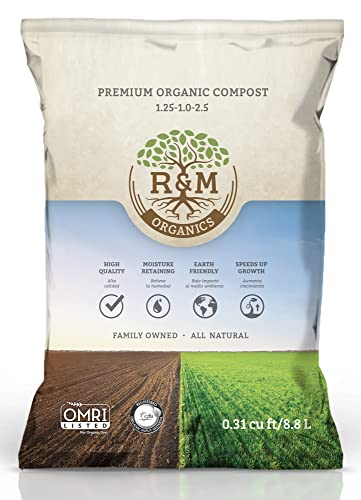
R&M Organics takes a dairy cow manure base and refines it through a thorough composting process that produces something genuinely clean and usable. The constant aeration during composting does two important things: it eliminates bad bacteria and it kills weed seeds, both of which are problems that plague lower-quality manure composts. What you end up with is a product that smells earthy — not like a barnyard — and applies cleanly without the anxiety of introducing weeds or pathogens into your garden beds.
The application rate is notably efficient. A quarter-inch layer is all you need to see results in established beds, which means your 10 lb bag goes further than you might expect. For new planting projects you can apply slightly more, but the high nutrient density of this compost means you're not using it as bulk filler — you're using it as a precision amendment. That's a different mindset than products like Black Kow or Michigan Peat, which are more volume-oriented. R&M is about concentration and efficiency.
The versatility is genuine. Tomatoes, roses, avocados, lawn grass — the nutrient profile supports all of them because it's derived from a stable, consistent feedstock (dairy cow manure) rather than a variable blend of municipal or industrial inputs. If you're the kind of gardener who wants one product that works across every planting in your yard, R&M Organics earns that claim. And if you're growing avocados or citrus alongside your vegetables, the balanced nutrition profile supports fruit production as well as foliar health.
Pros:
Cons:
Espoma is one of the most trusted names in organic gardening, and their Mushroom Compost Blend is a product that stands out for a very specific reason: the combination of mushroom compost with aged forest products creates an amendment that's exceptional for long-term soil conditioning. Mushroom compost — the spent growing medium from commercial mushroom cultivation — is dense with fungal mycelium, which builds the fungal networks in soil that plants use to access nutrients and water beyond what their immediate root zone can reach. It's biology-forward amendment that works at a deeper level than simple fertilization.
The aged forest products in the blend add carbon structure and create the spongy, well-aerated texture that soil microbes thrive in. This product doesn't just feed your plants — it feeds your soil food web, which means the benefits compound over time rather than depleting with each watering cycle. It's particularly excellent for trees, shrubs, and perennials that benefit from mycorrhizal networks. Use it at planting time to establish a healthy rhizosphere from day one, and you'll see the payoff in establishment speed and long-term vigor.
The 0.75 cubic foot bag is well-sized for targeted applications — amending individual planting holes for trees and shrubs, improving a section of vegetable bed, or working into the top layer of containers. Mix or rototill to a depth of 4-6 inches for best results. If you're building out a diverse garden ecosystem and also thinking about how to maintain plant health holistically, pairing this compost with good moisture management practices — such as understanding the benefits of electrolyte water for plants — gives you a complete picture of soil nutrition.
Pros:
Cons:
The single most important factor in bagged compost quality is how thoroughly it's been composted. Immature or partially composted material — sometimes called "hot" compost — is still actively breaking down when it hits your soil. That decomposition process consumes nitrogen that your plants need, temporarily depleting the very nutrient you were hoping to add. Fully matured compost should be dark brown to black, crumbly in texture, and smell earthy rather than sharp or ammonia-heavy. The products in this roundup all meet that standard, but it's worth understanding what you're evaluating when you open a bag. If you squeeze a handful and it smells like ammonia or fresh manure, it's not ready — it needs more time, or it's a lower-quality product that cut the composting process short.
Certifications can help here. OMRI (Organic Materials Review Institute) listing means the product has been vetted for use in certified organic production, which requires thorough composting as part of the process. Products like Charlie's Compost carry OMRI certification, which gives you an independent verification of quality beyond what the manufacturer claims on the bag. It's not the only indicator of quality, but it's a reliable one.
What went into the compost matters as much as how it was composted. Manure-based composts (Black Kow, R&M Organics, Michigan Peat) tend to be nitrogen-rich and excellent for general fertility. Specialty ingredient composts — like Coast of Maine's lobster compost or Espoma's mushroom compost — bring unique mineral profiles and biological components that standard manures can't match. Peat-based products (Michigan Peat) improve soil structure exceptionally well but come with environmental trade-offs that increasingly matter to modern gardeners.
If you're growing food crops organically, check for USDA organic certification or OMRI listing before purchasing. If you're just amending ornamental beds, these certifications matter less — what matters more is the nutrient profile and the maturity of the compost. Know what you're putting in the ground and why, and you'll make better purchasing decisions every time.
Compost application rates vary by purpose. For general soil amendment, the standard recommendation is 1-3 inches of compost worked into the top 6-8 inches of soil. One cubic foot of compost covers roughly 12 square feet at a 1-inch depth. Do that math before you buy — it'll tell you whether you need one bag or a dozen. For large lawn applications, the 40 lb Michigan Peat bag is more economical than buying multiple small bags of premium products. For targeted container or raised-bed applications, the smaller bags from Charlie's Compost or R&M Organics are more practical.
Don't make the mistake of treating all composts as interchangeable bulk commodities and buying entirely on price per pound. A nutrient-dense compost that requires a quarter-inch application rate will go further and perform better than a low-concentration product you're piling on by the inch. Understand the concentration and recommended rate before you calculate cost per application.
Match your compost to your application. Lawns do best with fine-textured, low-odor products that can be topdressed and watered in — Michigan Peat and Black Kow are strong choices here. Vegetable gardens and raised beds benefit most from nutrient-dense, biologically rich composts — Coast of Maine, Back to the Roots, and Espoma excel in these environments. Container gardens need composts with excellent moisture management and minimal odor — Charlie's Compost with its biochar addition is purpose-built for this use case.
Trees and shrubs are where fungal-rich composts like Espoma's Mushroom Blend genuinely shine. The mycorrhizal networks supported by mushroom compost establish faster and reach deeper than bacterial-dominant composts, giving woody plants the underground support system they need to thrive long-term. Match your product to your plant type and your application method, and you'll get dramatically better results than using whatever happens to be on sale.
Compost is decomposed organic matter that improves soil structure, water retention, drainage, and microbial life while adding a broad spectrum of nutrients. Fertilizer delivers specific concentrated nutrients — typically nitrogen, phosphorus, and potassium — without improving soil structure. Compost feeds the soil ecosystem; fertilizer feeds the plant directly. For long-term soil health, compost is the more valuable amendment, but fertilizers have their place for quick, targeted nutrient delivery. Most serious gardeners use both, with compost as the foundation and fertilizers as targeted supplements.
For a new raised bed, you'll typically want to fill it with a mix that includes 25-30% compost by volume. For a 4x8 raised bed that's 12 inches deep, that's roughly 8 cubic feet of total mix, meaning about 2-2.5 cubic feet of compost. For an established raised bed that just needs an annual top-dressing, 1-2 inches of compost worked into the top layer is usually sufficient — that's about 0.5 to 1 cubic foot per 4x8 bed. Measure your bed and calculate before you order so you're not making multiple trips.
Yes, over-applying compost is a real problem that most gardeners underestimate. Excessive compost can raise soil pH, create nutrient imbalances (particularly excess phosphorus), and actually reduce plant performance rather than improve it. Manure-based composts are especially easy to over-apply because they're nitrogen-rich. Stick to the recommended application rates on the bag, or use the general guideline of 1-3 inches per application season. If you're applying compost every year, a light annual top-dressing maintains fertility without building up to problematic levels.
It depends on the quality of both. Well-made homemade compost from diverse organic inputs — kitchen scraps, yard waste, wood chips — can be excellent and is essentially free after the initial setup. But poorly managed home compost bins produce immature, inconsistent material that can cause more problems than it solves. High-quality bagged composts like Coast of Maine or Espoma offer consistent, tested, certified products that perform reliably. In 2026, the best bagged composts rival homemade product in most respects, and they're far more convenient. Use both if you have them.
For lawn applications, spread compost in a thin, even layer — typically 1/4 to 1/2 inch deep — using a broadcast spreader or by hand-raking it across the surface. Water it in thoroughly after application to help it work down through the thatch layer and into the soil profile. The best time to apply is early spring before the lawn comes out of dormancy, or in early fall after summer heat stress has passed. Fine-textured, low-odor products like Michigan Peat and Black Kow work best for lawn applications because they spread evenly and integrate well without smothering grass blades.
Fully composted means the organic matter in the product has completed the decomposition process — microbial activity has broken down raw materials to a stable, humus-like end state. Fully composted material won't burn plant roots, won't introduce active weed seeds, and won't rob soil nitrogen to continue decomposing. It's immediately available to improve soil structure and feed soil microbes. Look for dark color, crumbly texture, and an earthy (not sharp or ammonia-like) smell as indicators. Products that smell strongly of ammonia or fresh manure are likely not fully composted and should be avoided or used very carefully.
Whether you grab a few bags of reliable Black Kow for your vegetable beds, invest in Coast of Maine's premium Bumper Crop for a serious soil overhaul, or go odor-free with Charlie's Compost for your balcony containers, the right bagged compost is out there for your specific situation — so pick the one that matches your garden type and start building better soil this season.
 |
 |
 |
 |

About Truman Perkins
Truman Perkins is a Detroit-based SEO consultant who's been in the business for over a decade. He got his start helping friends and clients get their websites off the ground, and he continues to do so today. In his free time, Truman enjoys learning and writing about gardening - something he believes is a natural stress reliever. He lives with his wife, Jenny, and their twins in Detroit.


Get new FREE Gifts. Or latest free growing e-books from our latest works.
Disable Ad block to reveal all the links. Once done, hit a button below
|
|
|
|
 rinjal