What distinguishes a garden that thrives after dark from one that merely survives until morning? The answer often lies in a deliberate selection of flowers that bloom at night, species that have evolved to open their petals under moonlight, releasing fragrance and color when most of the garden has gone dormant. These nocturnal bloomers serve a dual purpose: they attract essential pollinators such as moths and bats, and they transform an otherwise static evening landscape into something alive and sensory. For those looking to deepen their understanding of plants, herbs, and farming, night-blooming specimens represent one of the most rewarding — and most overlooked — categories in ornamental horticulture.
Night-blooming flowers operate on a circadian rhythm opposite to their diurnal counterparts. Their anthesis — the period during which the flower is fully open and functional — is triggered by decreasing light levels and dropping temperatures. This is not merely aesthetic novelty. It is an evolutionary strategy honed over millennia, allowing these species to access a pollinator niche with far less competition. Understanding the mechanics behind this process is essential for anyone seeking to cultivate a moon garden or simply add nocturnal dimension to an existing bed.
The following guide examines the most reliable night-blooming species, separates fact from common misconception, and provides the horticultural detail necessary to grow them successfully in a range of climates and soil conditions.
Contents
Before diving into individual species profiles, a comparative overview helps clarify which flowers that bloom at night best suit different garden contexts. Hardiness zone, mature spread, fragrance intensity, and bloom duration all vary significantly across the most commonly cultivated nocturnal species.
The table below evaluates species based on five factors most relevant to gardeners planning a dedicated night bed: USDA hardiness range, peak bloom season, average fragrance throw (measured in approximate meters from the plant), single-bloom duration, and growth habit. Each species listed has demonstrated reliable nocturnal anthesis under standard cultivation conditions.
| Species | Hardiness Zone | Peak Bloom | Fragrance Throw | Bloom Duration | Growth Habit |
|---|---|---|---|---|---|
| Epiphyllum oxypetalum (Queen of the Night) | 10–12 | Summer | 5–8 m | Single night | Epiphytic cactus |
| Ipomoea alba (Moonflower) | 9–11 (annual elsewhere) | Mid-summer–fall | 3–5 m | Single night | Twining vine |
| Cestrum nocturnum (Night-Blooming Jasmine) | 8–11 | Spring–fall | 10–15 m | Multiple nights | Woody shrub |
| Mirabilis jalapa (Four O'Clocks) | 7–11 | Summer–fall | 2–3 m | Single evening | Bushy perennial |
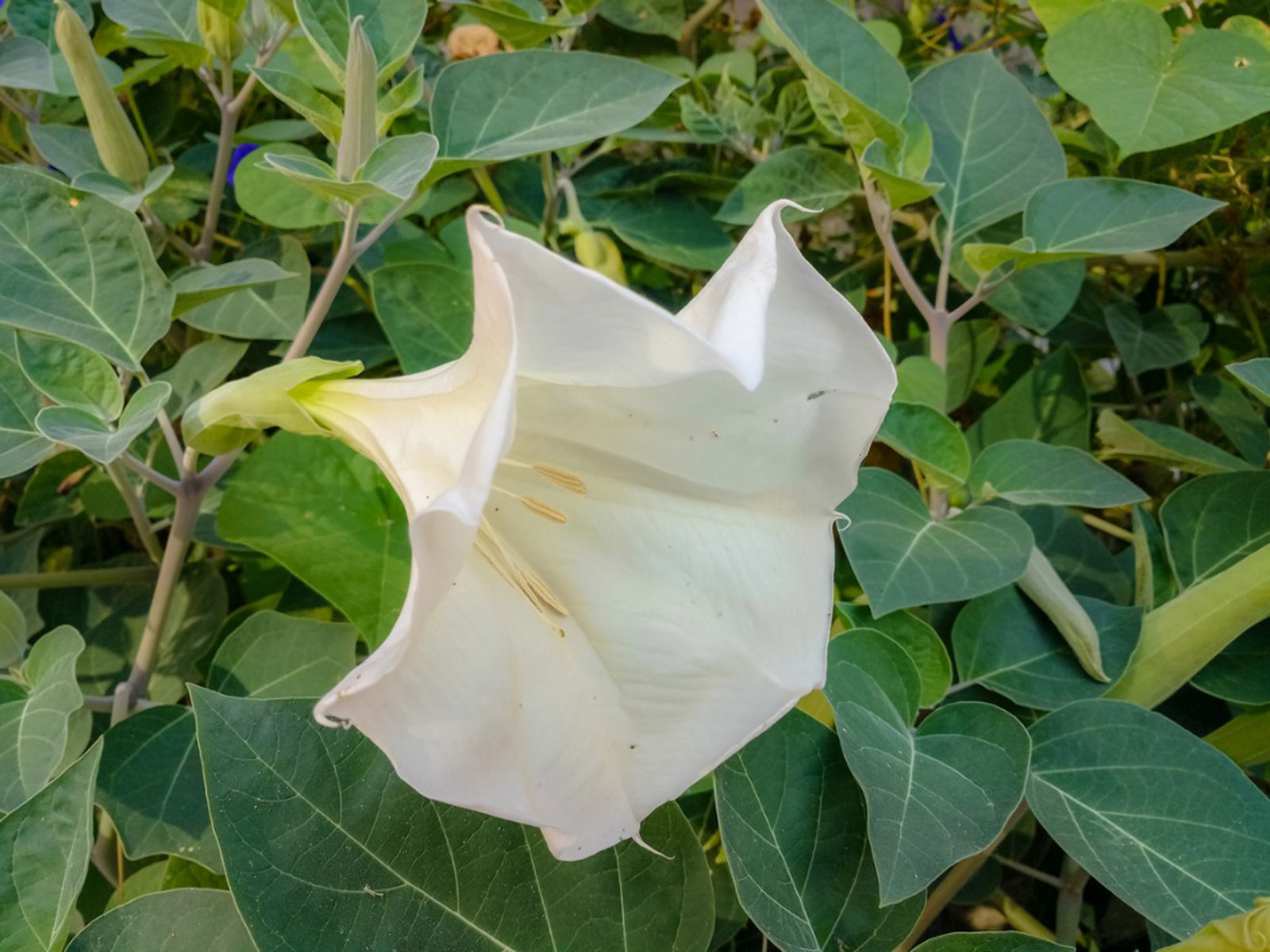
| Datura innoxia (Moonflower Datura) | 5–10 | Summer | 4–6 m | Single night | Spreading annual/perennial |
| Oenothera biennis (Evening Primrose) | 4–9 | Summer | 1–2 m | Single night | Biennial rosette |
| Nicotiana alata (Flowering Tobacco) | 10–11 (annual elsewhere) | Summer | 3–4 m | Single night | Upright herbaceous |
Cestrum nocturnum stands apart for sheer fragrance intensity, capable of scenting an entire courtyard from a single established specimen. It is, however, toxic to pets and children — a critical consideration for household gardens. For those interested in species that also carry sweet fragrance after dark, the curated list at flowers that bloom at night and have sweet fragrance provides additional depth on scented nocturnal cultivars.
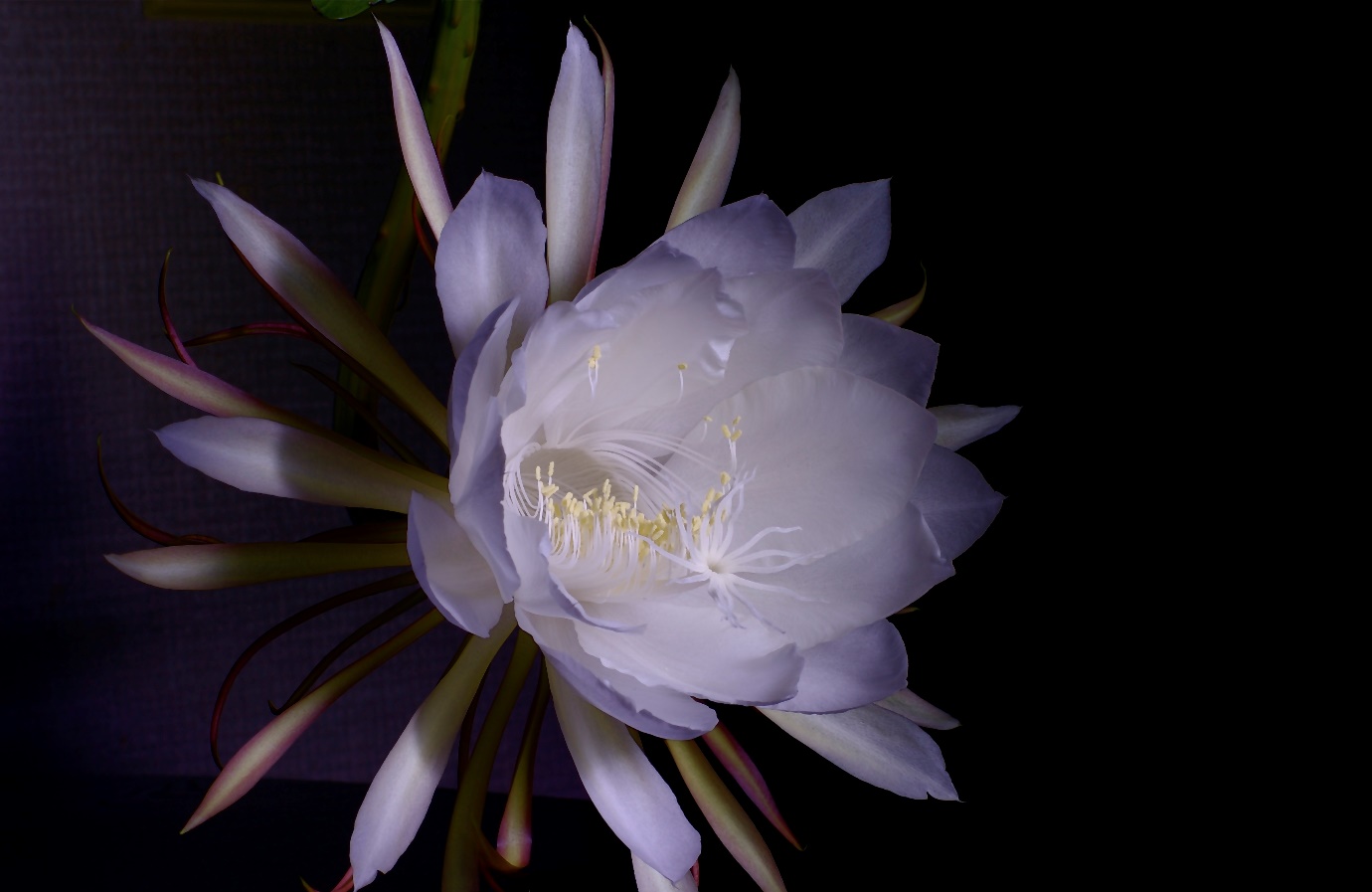
Epiphyllum oxypetalum remains the most dramatic single-event bloomer. Its flowers open once per season, typically lasting only six to eight hours, making it a celebrated event among collectors. Mirabilis jalapa, by contrast, offers dependable nightly blooms across a long season and self-seeds readily — ideal for low-maintenance borders.
Night-blooming species are surrounded by persistent myths that lead to poor cultivar selection and misguided care practices. Addressing these directly prevents wasted effort and plant loss.
A widespread assumption holds that all flowers that bloom at night produce strong fragrance. This is incorrect. Many nocturnal species — including several Selenicereus cultivars and most evening primrose varieties — produce little to no detectable scent. Fragrance is a pollination strategy, not a universal night-bloom trait. Species pollinated by hawkmoths (Sphingidae) tend toward heavy fragrance, while those relying on other nocturnal insects or self-pollination may be essentially scentless.
Another common error is the belief that nocturnal flowers serve no pollinator function and are purely ornamental. In reality, night-blooming species form critical nodes in local ecosystems. According to the U.S. Forest Service, nocturnal pollinators including moths, bats, and certain beetle species depend on these flowers for nectar and pollen. Removing night-blooming plants from a landscape can measurably reduce local pollinator diversity.
Pro Tip: Avoid placing night-blooming species directly under bright security or landscape lighting. Artificial light disrupts the photoperiod cues that trigger anthesis and confuses nocturnal pollinators navigating by moonlight.
It is also worth noting that not all "night-blooming" plants are strictly nocturnal. Some, like Mirabilis jalapa, open in late afternoon and persist through the night. Others, such as certain Nicotiana hybrids, have been bred for daytime display and have lost their nocturnal opening behavior entirely. Checking cultivar-specific bloom timing — not just species-level data — prevents disappointment.
Growing flowers that bloom at night successfully requires attention to soil composition, irrigation timing, and nutrient delivery schedules that differ in key respects from standard diurnal ornamental care.
Most nocturnal bloomers originate in subtropical or tropical environments and share a preference for well-drained, slightly acidic to neutral substrates (pH 6.0–7.0). Heavy clay soils that retain moisture around the root crown invite fungal pathogens, particularly Pythium and Phytophthora, to which many night-bloomers are susceptible. Amending with coarse perlite or pumice at a 30% ratio by volume addresses this in container and in-ground plantings alike. Gardeners exploring substrate options may find the comparison of coco peat types and benefits useful for mixing lightweight media.
Watering should occur in the early morning rather than at evening. Wet foliage overnight — when humidity naturally peaks — dramatically increases the incidence of powdery mildew and botrytis. Drip irrigation or soaker hoses positioned at the base eliminate foliar wetting entirely. For epiphytic species like Epiphyllum, allow the substrate to dry almost completely between waterings; these plants store moisture in their stems and rot quickly in saturated media.
A balanced slow-release fertilizer (10-10-10 or 14-14-14) applied at the start of the growing season provides baseline nutrition. To promote heavier bud set, switch to a high-phosphorus formulation (5-10-5) six weeks before the expected bloom period. Excessive nitrogen drives vegetative growth at the expense of flowers — a common mistake with Cestrum nocturnum, which responds to heavy feeding with abundant foliage and sparse bloom.
Pruning practices vary by growth habit. Woody shrubs like Cestrum benefit from hard pruning in late winter to maintain shape and encourage branching. Epiphytic cacti should never be pruned aggressively; remove only dead or damaged segments. Annuals and biennials such as Nicotiana and Oenothera require deadheading to extend the bloom window but no structural pruning.
Timing is as critical as technique when establishing flowers that bloom at night. Planted at the wrong point in the season, even robust species fail to establish before their bloom period, resulting in a lost season.
In USDA zones 9–12, most nocturnal bloomers can be transplanted outdoors once nighttime temperatures consistently hold above 15°C (59°F). This typically corresponds to mid-spring. In zones 4–8, starting seeds indoors eight to ten weeks before the last frost date ensures transplant-ready seedlings by the time outdoor conditions stabilize. Moonflower (Ipomoea alba) seeds have a notoriously hard coat and benefit from scarification — nicking the seed coat with a file or soaking in warm water for 24 hours — before sowing.

Container-grown specimens purchased from nurseries can be planted throughout the growing season, though establishment rates are highest when transplanting occurs during overcast periods or in the evening, reducing transplant shock from direct solar exposure during the critical first 48 hours.
Several environmental factors reliably inhibit or prevent nocturnal anthesis. Prolonged exposure to artificial light — particularly in the blue spectrum (400–500 nm) — interferes with the phytochrome-mediated signaling that initiates bud opening. This is especially relevant for urban gardens near streetlights or floodlit commercial properties. Understanding the nuances of how plants respond to day-night cycles provides additional context on photoperiod sensitivity.
Drought stress during the bud development phase causes bud abortion in most species. Night-blooming jasmine is particularly sensitive — even brief soil moisture deficits during its pre-bloom window result in dramatically reduced flower counts. Conversely, waterlogged conditions trigger root hypoxia and the same bud-drop outcome through a different physiological pathway.
Warning: Datura species (including D. innoxia and D. stramonium) contain tropane alkaloids throughout all plant parts. Handle with gloves, and position well away from areas accessible to children or livestock.
A moon garden — a bed designed primarily for nocturnal enjoyment — requires a different design logic than conventional borders. Color visibility, fragrance corridors, and proximity to seating areas all take priority over daytime aesthetics.
The most effective moon gardens layer species with staggered bloom periods. Evening primrose opens earliest, typically around 6:00–7:00 PM. Four o'clocks follow within the hour. Moonflower and night-blooming jasmine reach full anthesis between 8:00 and 9:00 PM, while Queen of the Night opens closer to midnight. This layered approach ensures continuous fragrance and visual interest from dusk through the early hours.
White and pale-colored blooms reflect ambient moonlight most effectively. Pair nocturnal flowers with silvery-foliage plants — Artemisia, Stachys byzantina (lamb's ear), or Senecio cineraria (dusty miller) — to amplify light reflection and create a luminous ground plane. The contrast between dark foliage and pale flowers is what gives a moon garden its characteristic ethereal quality.
Not all nocturnal species coexist well. Datura, with its aggressive spreading habit and allelopathic root exudates, suppresses the growth of smaller companions within its root zone. It is best planted in isolation or in large containers. Night-blooming jasmine, while not allelopathic, is a vigorous grower that can shade out neighboring plants if not pruned regularly.
Beneficial pairings include moonflower trained on a trellis behind a low border of four o'clocks, or evening primrose interplanted with Nicotiana alata — both share similar soil and moisture preferences and bloom at complementary times. For gardeners who also enjoy shade-tolerant colorful flowers, many of those species make excellent daytime visual fillers in beds that transition to night-bloom mode after sundown.
Establishing a dedicated night-bloom bed does not require substantial investment, but costs vary depending on whether one starts from seed, purchases established nursery stock, or propagates from existing collections.
Most nocturnal bloomers are exceptionally easy to propagate, making them among the most cost-effective ornamentals over a multi-season horizon. Mirabilis jalapa produces abundant tuberous roots that can be divided annually. Moonflower self-seeds prolifically — often to the point of requiring thinning. Epiphyllum cuttings, shared between collectors, root in two to four weeks and reach blooming maturity within two to three seasons.
Cestrum nocturnum propagates readily from semi-hardwood cuttings taken in late summer. A single established plant can yield dozens of cuttings per season, making it practical to create fragrance hedges at minimal cost. Evening primrose, as a biennial, requires allowing a portion of the stand to go to seed each season to maintain the colony — a zero-cost propagation strategy that demands no active intervention.
Not necessarily. Most nocturnal bloomers respond to relative decreases in light intensity rather than absolute darkness. However, direct exposure to artificial light — especially in the blue spectrum — can delay or prevent anthesis. Positioning plants away from landscape lighting and streetlamps ensures reliable bloom triggers.
Several species adapt well to indoor cultivation. Epiphyllum oxypetalum thrives in bright indirect light and blooms reliably indoors given a distinct rest period with reduced watering. Night-blooming jasmine can be grown in large containers near south-facing windows, though its intense fragrance may be overwhelming in enclosed spaces.
No. Datura species contain tropane alkaloids toxic to humans and animals. Cestrum nocturnum berries are poisonous. Mirabilis jalapa seeds and roots are mildly toxic. Always verify the toxicity profile of any species before planting in areas accessible to pets or children, and consider physical barriers or elevated containers for hazardous cultivars.
Bloom duration varies by species. Epiphyllum and moonflower produce single-night flowers that wilt by morning. Evening primrose blooms last one night. Cestrum nocturnum flowers persist for multiple nights before dropping. Four o'clocks open each evening across a season spanning several months, though individual flowers are ephemeral.
 |
 |
 |
 |

About Truman Perkins
Truman Perkins is a Detroit-based SEO consultant who's been in the business for over a decade. He got his start helping friends and clients get their websites off the ground, and he continues to do so today. In his free time, Truman enjoys learning and writing about gardening - something he believes is a natural stress reliever. He lives with his wife, Jenny, and their twins in Detroit.


Get new FREE Gifts. Or latest free growing e-books from our latest works.
Disable Ad block to reveal all the links. Once done, hit a button below
|
|
|
|
 rinjal